
Hiking and Glaucoma: Terrain, Altitude, and Sun Exposure
However, hiking also brings challenges: long treks can lead to dehydration, strong sunlight, and difficult footing. Importantly for glaucoma...
Deep research and expert guides on maintaining your visual health.
However, hiking also brings challenges: long treks can lead to dehydration, strong sunlight, and difficult footing. Importantly for glaucoma...
Track peripheral vision changes between eye doctor visits. Start your free trial and get results in under 5 minutes.
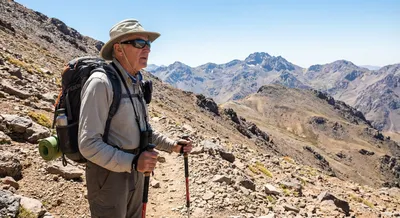
Mountain hiking means walking on trails that go up into hills and mountains, where slopes are steeper and conditions can change quickly. It often involves longer climbs, higher elevations, and rougher terrain than lowland walks. Because of the elevation and exposure, mountain routes can be physically demanding and require more planning and fitness. Weather in mountains can shift fast, with colder temperatures, strong sun, wind, and sudden storms appearing where the surrounding valley feels calm. Being prepared for these differences is what makes mountain hiking distinct from easy trail walks. Before you go, learn the route, check weather forecasts, and pick gear suited for steep paths, such as supportive boots, trekking poles, and layered clothing. Acclimatize to elevation gradually if you will climb high, watch for signs of altitude sickness, and allow extra time for slower, steadier progress. Navigation skills are important because trails may be less obvious and GPS signals can be unreliable in remote areas. Respect the fragile mountain environment by staying on established routes, carrying out waste, and minimizing impacts on plants and wildlife. With careful preparation and caution, mountain hiking offers rewarding views and a strong sense of achievement while keeping you safe.