
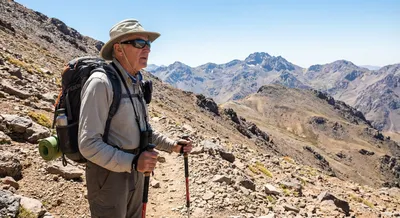
Hiking and Glaucoma: Terrain, Altitude, and Sun Exposure
However, hiking also brings challenges: long treks can lead to dehydration, strong sunlight, and difficult footing. Importantly for glaucoma...
Deep research and expert guides on maintaining your visual health.
However, hiking also brings challenges: long treks can lead to dehydration, strong sunlight, and difficult footing. Importantly for glaucoma...
Hiking is walking in natural places like trails, hills, and mountains for recreation, exercise, or travel. It ranges from short, easy walks to long, multi-day treks and can be done alone or with others. The activity combines physical benefits—like improved cardiovascular fitness—and mental benefits such as reduced stress and a better mood. Good preparation makes hikes safer and more enjoyable: wear sturdy shoes, bring enough water, pack layers for changing weather, and carry a map or a reliable navigation tool. A small first aid kit, sun protection, and snacks help you handle minor problems on the trail. Hiking also involves being aware of the environment—stay on marked paths, know local wildlife risks, and follow leave-no-trace practices to protect nature. Terrain and elevation affect difficulty; steep or rocky trails require better balance and stronger ankles, while long distances demand endurance and pacing. Weather can change quickly outdoors, so checking forecasts and turning back when conditions worsen is important. Hiking at higher elevations brings special considerations like thinner air and stronger sun, so gradual acclimatization and extra hydration may be needed. With sensible planning and respect for the outdoors, hiking is an accessible way to get exercise, learn new skills, and enjoy nature.