
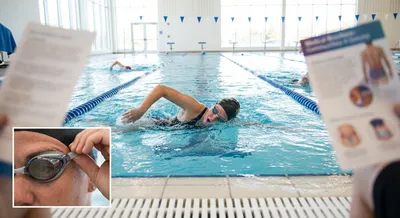
Lap Swimming and Glaucoma: Cardiorespiratory Benefits vs. Goggle and Head Position Issues
However, swimming has some unique eye-related factors. Tight-fitting goggles, the face-down posture of freestyle, and chlorinated pool water can...
Deep research and expert guides on maintaining your visual health.
However, swimming has some unique eye-related factors. Tight-fitting goggles, the face-down posture of freestyle, and chlorinated pool water can...
Screen your peripheral vision from home — no downloads, no waiting rooms. Sign up for a free trial and test in under 5 minutes.
Backstroke is a swimming style performed on your back with alternating arm movements and a steady flutter kick. Because your face is above water most of the time, breathing is easier than in other strokes and many swimmers find it less stressful. The arms move in a windmill-like pattern: one arm recovers over the water while the other pulls through beneath the surface to propel you forward. Good body alignment—keeping hips near the surface and a neutral head position—reduces drag and helps you swim efficiently. Effective backstroke uses rotation through the shoulders and torso to add power and reduce strain on the arms. Starts and turns require special practice since you are facing upward; competitive swimmers use a backstroke start from the pool edge and a flip turn variant for races. This style strengthens the back, shoulders, and legs and can improve posture and spinal mobility over time. Common issues include sinking hips, poor head alignment, and shoulder discomfort, all of which can be improved with technique work and drills. Backstroke is useful for swimmers of many levels because it offers a different muscle balance and a way to breathe freely while still getting a strong workout.