
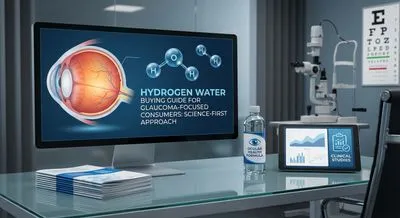
Hydrogen Water Buying Guide for Glaucoma-Focused Consumers: Science-First Approach
Many experts agree that chronic glaucoma is not just about pressure – cell damage from oxidative stress plays a major role. For example, a 2016 PLOS...
Deep research and expert guides on maintaining your visual health.
Many experts agree that chronic glaucoma is not just about pressure – cell damage from oxidative stress plays a major role. For example, a 2016 PLOS...
Track peripheral vision changes between eye doctor visits. Start your free trial and get results in under 5 minutes.
Hydrogen concentration refers to how much molecular hydrogen gas (H2) is dissolved in a liquid or present in a given space. It is usually reported in parts per million (ppm) or milligrams per liter (mg/L), which tell you how many hydrogen molecules are available per amount of water. In products that contain dissolved hydrogen, typical concentrations are small numbers like 0.5 to 1.6 ppm, and those numbers can be measured with specialized meters or chemical test kits. The concentration depends on how the hydrogen was added, how the product was sealed, the temperature, and how long it has been stored. Because hydrogen is a tiny, fast-moving gas, it tends to escape from containers over time, so freshness and packaging matter for holding the concentration steady. You can’t judge concentration by taste or smell; you need a measurement or an accurate label to know the actual amount present. Why concentration matters is that it tells you how much active hydrogen is available to do whatever effect is being sought. For consumers comparing products, a higher measured concentration usually means more hydrogen is present at the time of testing, which can be important for consistency and potential effects. Research on what concentrations are most useful is still ongoing, so concentration is only one factor to consider alongside quality, storage, and intended use. At the low levels used in consumer products, hydrogen is considered safe and non-toxic; it only becomes flammable at much higher concentrations in air, not in dissolved form. To make practical choices, look for clear concentration figures measured at the time of bottling, sealed packaging that slows gas loss, and guidance on storage; and always consider medical advice for health-related uses.