
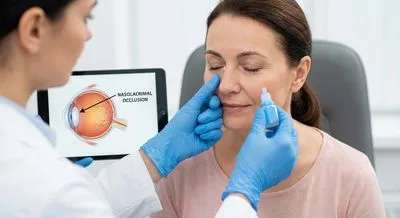
Mastering Eye Drop Technique: Nasolacrimal Occlusion to Boost Efficacy and Safety
Figure: Handle the eye drop bottle carefully. Do not let the tip touch your eye or eyelid – this keeps the bottle sterile and prevents infection ().
Deep research and expert guides on maintaining your visual health.
Figure: Handle the eye drop bottle carefully. Do not let the tip touch your eye or eyelid – this keeps the bottle sterile and prevents infection ().
Our visual field test is inspired by the perimetry methods eye care professionals use. Check for blind spots and track changes over time.
Test Your VisionEyelid closure is the action of bringing the upper and lower eyelids together to cover and protect the eyeball, whether for a blink or for longer during sleep. This simple motion shields the eye from dust, bright light, and foreign objects while spreading tears across the surface to keep it moist and healthy. A normal pattern of blinking and full closure helps maintain clear vision and prevents the cornea from becoming dry or irritated. When eyelid closure is weak or incomplete, the eye can become dry, inflamed, or more prone to infection and injury. Certain nerve or muscle problems, injuries, or illnesses can reduce a person’s ability to close their eyelids fully, which may need assessment and care. Eyelid closure is also important when applying eye medicines or during recovery after eye procedures because it helps keep medicine on the eye and reduces unwanted drainage. Gentle closing of the lids is different from tightly squeezing the eyes; forceful squeezing can be uncomfortable and briefly raise pressure inside the eye. During sleep, normal closure maintains moisture and prevents exposure-related problems, while people who cannot fully close their lids may need protective measures such as ointment or coverings. If someone notices persistent dryness, irritation, or an inability to close the eyelids fully, they should see a health professional for evaluation. Overall, proper eyelid closure is a basic but essential function that supports comfort and long-term eye health.