
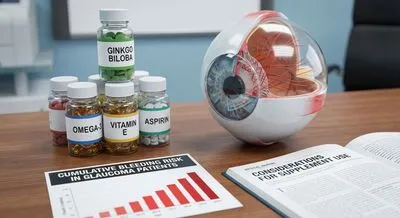
Stacking Blood-Thinning Supplements: Cumulative Bleeding Risk in Glaucoma Patients
Garlic. Garlic (Allium sativum) contains allicin and related molecules that inhibit platelets in a dose-dependent way (). In practical terms, eating...
Deep research and expert guides on maintaining your visual health.
Garlic. Garlic (Allium sativum) contains allicin and related molecules that inhibit platelets in a dose-dependent way (). In practical terms, eating...
Screen your peripheral vision from home — no downloads, no waiting rooms. Sign up for a free trial and test in under 5 minutes.
Anticoagulants are medications that reduce the blood’s ability to form clots, often called blood thinners, and they are used to prevent stroke, heart attack, and dangerous clots in veins and arteries. They work by interfering with specific steps in the clotting process, so blood flows more easily through narrowed or damaged vessels. Common reasons people take them include irregular heart rhythms, previous blood clots, and certain types of heart valve replacements. While they lower the risk of clot-related events, they also increase the risk of bleeding because the body is less able to stop bleeding when it starts. That means patients and doctors must balance the benefit of preventing clots against the increased chance of bruising, nosebleeds, or more serious bleeding inside the body. Some anticoagulants require regular blood tests to monitor their effect, while newer ones have more predictable dosing and need less routine monitoring. These drugs can interact with other medicines, supplements, and even certain foods, so it’s important to tell every health provider and pharmacist what you’re taking. Before surgeries or invasive procedures, doctors often adjust anticoagulant use to lower bleeding risk and then restart them afterward when it’s safe. Understanding how these medications work and their risks helps people use them safely and get the protection they need from clot-related problems.