
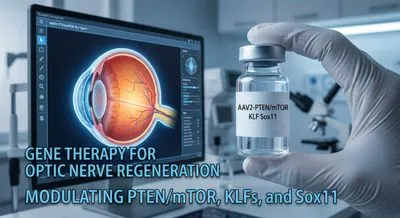
Gene Therapy for Optic Nerve Regeneration: Modulating PTEN/mTOR, KLFs, and Sox11
Under normal conditions, adult RGCs keep the mTOR pathway largely off, which limits their ability to grow new axons (). PTEN is a gene that inhibits...
Deep research and expert guides on maintaining your visual health.
Under normal conditions, adult RGCs keep the mTOR pathway largely off, which limits their ability to grow new axons (). PTEN is a gene that inhibits...
Our visual field test is inspired by the perimetry methods eye care professionals use. Check for blind spots and track changes over time.
Test Your VisionA suprachoroidal injection is a way of delivering medicine directly into the eye by placing it into the small space between the sclera and the choroid, two layers at the back of the eyeball. This approach targets tissues in the posterior segment of the eye, like the retina and retinal pigment epithelium, where many serious eye conditions occur. Clinicians use tiny needles or specialized microcatheters to reach that space without going through the more delicate internal eye structures. Because the drug sits close to the diseased tissue, lower doses can often be effective and systemic exposure is reduced compared with other routes. This focused delivery can increase treatment effectiveness and reduce side effects that happen when medicines circulate through the whole body. The technique also allows for sustained-release devices or reservoirs to be placed so medication can be released slowly over time. Risks are similar to other intraocular procedures and include local infection, bleeding, inflammation, changes in eye pressure, and rarely damage to the retina. Careful technique and monitoring help minimize those risks, and many patients tolerate the procedure well. Suprachoroidal delivery has become important because it expands options for treating retinal diseases, diabetic eye problems, and some experimental therapies. By improving how precisely drugs reach the back of the eye, it may make treatments safer, more effective, and more convenient for patients.