
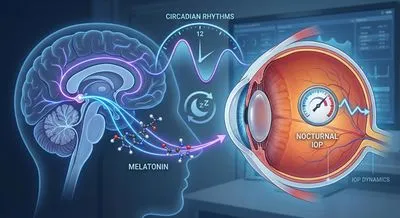
Мелатонин, циркадные ритмы и динамика ВГД в ночное время
Мелатонин и глаз: ВГД в ночное время и нейропротекция Мелатонин — это нейрогормон, вырабатываемый в рамках ~24-часового цикла (циркадного ритма), кото...
Cercetări aprofundate și ghiduri de experți pentru menținerea sănătății vizuale.
Мелатонин и глаз: ВГД в ночное время и нейропротекция Мелатонин — это нейрогормон, вырабатываемый в рамках ~24-часового цикла (циркадного ритма), кото...
Melatonin og øyet: Nattlig IOP og nevrobeskyttelse Melatonin er et nevrohormon som produseres i en syklus på ca. 24 timer (døgnrytme), og som spiller...
Melatonin and the Eye: Nighttime IOP and Neuroprotection Melatonin is a neurohormone produced in a ~24-hour cycle (circadian rhythm) that plays key ro...
Începe testul gratuit al câmpului vizual în mai puțin de 5 minune.
Începe testul acumMelatonin is a hormone your brain releases to signal that it is time to wind down and prepare for sleep. Production rises when it gets dark and falls when light returns, which helps set and reinforce your daily sleep-wake cycle. It acts more like a timing signal than a sedative: it tells your body when night has arrived, helping to shift internal clocks to match the external day-night cycle. Light, especially blue light from screens, suppresses melatonin production and can delay the feeling of sleepiness. People sometimes use melatonin as a short-term supplement to help with jet lag, shift work, or certain sleep difficulties, and when used correctly it can help reset the timing of sleep. However, the dose and timing matter a lot, and it is not a one-size-fits-all cure for ongoing sleep problems. Long-term use, interactions with medications, and use in children or pregnant people should be discussed with a healthcare professional. Understanding melatonin helps explain why darkness supports sleep and why nighttime exposure to artificial light can cause trouble falling asleep.