
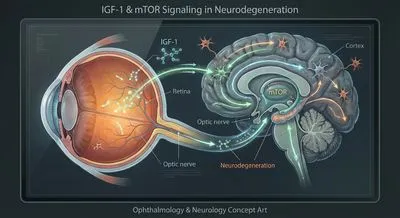
IGF-1, mTOR jelátvitel és neurodegeneráció a szemben és az agyban
Az IGF-1 egy kis fehérjehormon, amely szorosan kapcsolódik az inzulinhoz. A májban (és egyes szövetekben) termelődik a növekedési hormon hatására. A...
시각 건강을 유지하기 위한 심층 연구 및 전문가 가이드.
Az IGF-1 egy kis fehérjehormon, amely szorosan kapcsolódik az inzulinhoz. A májban (és egyes szövetekben) termelődik a növekedési hormon hatására. A...
IGF-1は、インスリンと密接に関連する小さなタンパク質ホルモンです。成長ホルモンの影響下で肝臓(および一部の組織)で生成されます。体内では、IGF-1は多くの細胞型の成長と生存を促進します ()。神経系では、IGF-1はニューロンの成長と神経保護に特に重要です。例えば、実験室での研究では、IGF-...
IGF-1 yra nedidelis baltymų hormonas, glaudžiai susijęs su insulinu. Jis gaminamas kepenyse (ir kai kuriuose audiniuose) veikiant augimo hormonui....
IGF-1 är ett litet proteinhormon nära besläktat med insulin. Det bildas i levern (och i vissa vävnader) under påverkan av tillväxthormon. I kroppen...
IGF-1 ist ein kleines Proteinhormon, das eng mit Insulin verwandt ist. Es wird in der Leber (und in einigen Geweben) unter dem Einfluss von...
IGF-1 je malý proteinový hormon úzce související s inzulinem. Vytváří se v játrech (a v některých tkáních) pod vlivem růstového hormonu. V těle IGF-1...
IGF-1 is a small protein hormone closely related to insulin. It is made in the liver (and in some tissues) under the influence of growth hormone. In...
mTOR is a protein inside cells that acts like a central control switch to tell cells when to grow, make proteins, or conserve resources. Its full name is the mechanistic target of rapamycin, and it forms two main complexes that respond to different cues from the environment. These complexes sense nutrients, energy status, oxygen, and signals from growth factors to decide whether conditions are right for building and dividing. When mTOR is active, cells increase protein production and metabolism and reduce recycling processes called autophagy; when it is less active, cells conserve resources and focus on repair. Because mTOR controls such fundamental choices, it plays a big role in growth, immune function, how tissues respond to stress, and aging. Abnormal mTOR activity is linked to cancer, metabolic disease, and some neurodegenerative conditions because it can upset the balance between growth and repair. Drugs that affect mTOR, such as rapamycin and related compounds, are used experimentally and sometimes clinically to influence immune responses, cell growth, and aging-related processes. Studying mTOR helps researchers understand how cells decide between building up and breaking down, which is central to both health and disease.