
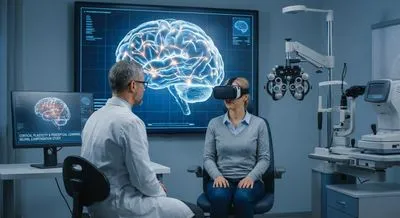
뇌 가소성과 지각 학습: 뇌는 시신경 손상을 보상할 수 있는가?
흥미롭게도 많은 녹내장 환자는 맹점을 거의 인지하지 못합니다. 뇌가 누락된 주변 정보를 "채워 넣는" 이러한 지각적 채워넣기(perceptual filling-in)는 신경 보상을 반영하는 것으로 여겨집니다. 예를 들어, 한 뇌 영상 연구에서는 녹내장 환자(심각한...
시각 건강을 유지하기 위한 심층 연구 및 전문가 가이드.
흥미롭게도 많은 녹내장 환자는 맹점을 거의 인지하지 못합니다. 뇌가 누락된 주변 정보를 "채워 넣는" 이러한 지각적 채워넣기(perceptual filling-in)는 신경 보상을 반영하는 것으로 여겨집니다. 예를 들어, 한 뇌 영상 연구에서는 녹내장 환자(심각한...
5분 이내에 무료 시야 검사를 시작하세요.
fMRI는 기능적 자기공명영상의 영어 약어로, 뇌의 활동 변화를 영상으로 보여주는 검사입니다. 이 방법은 신경세포의 직접적인 전기 신호가 아니라 혈액 속 산소 농도의 변화를 측정해 어느 부위의 활동이 상대적으로 증가했는지를 추정합니다. 검사 중에 특정 과제나 자극을 주면 뇌의 활동 패턴을 이미지로 확인할 수 있어 어떤 부분이 기능적으로 관여하는지 볼 수 있습니다. fMRI는 비침습적이고 방사선을 사용하지 않아 비교적 안전하게 반복 측정이 가능합니다. 다만 시간 해상도는 제한적이며 머리 움직임이나 금속 물질이 있으면 결과에 영향을 줄 수 있다는 한계가 있습니다. 임상적으로는 수술 전 기능 영역을 파악하거나 질환의 변화를 관찰하는 데 활용됩니다. 연구에서는 기억, 언어, 감각 처리 등 다양한 인지 기능이 뇌에서 어떻게 구현되는지 이해하는 데 중요한 도구입니다. 결과 해석에는 전문 지식이 필요하고, 혈류 변화가 항상 신경 활동을 정확히 반영하는 것은 아니라는 점을 염두에 두어야 합니다. 검사 과정은 MRI 장비 안에서 과제를 수행하거나 자극을 받는 동안 여러 장의 영상을 촬영하는 방식으로 진행됩니다. fMRI는 뇌의 기능을 시각화해 진단과 치료 계획, 재활 전략 수립에 큰 도움을 주는 중요한 기술입니다.