
Disease-modifying glaucoma drugs
Right now, no therapy has been proven to do this in patients. In large, decades-long studies only pressure lowering showed a clear benefit. In fact,...
Deep research and expert guides on maintaining your visual health.
Right now, no therapy has been proven to do this in patients. In large, decades-long studies only pressure lowering showed a clear benefit. In fact,...

ET-1 is produced by many eye tissues (retina, ciliary body, trabecular meshwork, etc.). It normally helps regulate blood flow and aqueous humor...

Glaucoma is roughly twice as common in older adults, and women make up a large portion of patients. Researchers have long noticed that female...
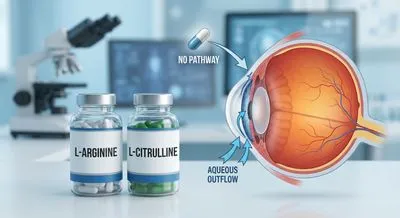
The body also has a backup route to make NO from dietary nitrates (the “nitrate–nitrite–NO pathway”). Normally, under conditions like low oxygen or...

Mirtogenol® is a proprietary supplement blend containing two main ingredients: Mirtoselect®, a standardized bilberry fruit extract (Vaccinium...
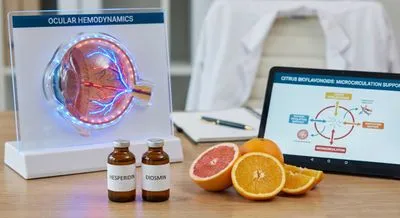
Blood vessels relax when their lining cells (endothelium) make the gas nitric oxide (NO). Hesperidin itself is a sugar-linked molecule that is broken...
Visual field loss from conditions like glaucoma can go unnoticed. Start a free trial and screen for potential blind spots in minutes.
Nitric oxide is a simple gas molecule the body produces and uses as a key chemical messenger to control several vital processes. One of its most important roles is relaxing and widening blood vessels, which improves blood flow and helps regulate blood pressure. Endothelial cells that line blood vessels make nitric oxide from amino acids, and the molecule acts quickly in nearby tissues before breaking down, so its effects are local and short-lived. Because it improves circulation, nitric oxide is central to delivering oxygen and nutrients to muscles and organs during exercise and daily activity, and it also plays roles in nerve signaling and immune responses. Levels can be influenced by diet, activity, and overall health — for example, exercise and nitrate-rich foods can boost production. Some supplements aim to increase nitric oxide indirectly by supplying building blocks the body uses to make it. While healthy nitric oxide function supports cardiovascular health and physical performance, too little can contribute to high blood pressure and poor circulation, and uncontrolled production can cause inflammation in some conditions. Healthcare providers and researchers pay close attention to nitric oxide because it links lifestyle, vascular function, and disease risk, and because it is a target for treatments that aim to improve blood flow safely.