
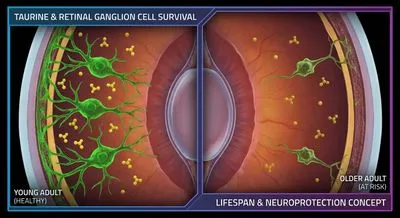
Taurine et survie des cellules ganglionnaires de la rétine tout au long de la vie
Introduction La taurine est un acide aminosulfonique riche en nutriments, présent en fortes concentrations dans la rétine et d'autres tissus neuraux....
आपके दृष्टि स्वास्थ्य को बनाए रखने के लिए गहन शोध और विशेषज्ञ मार्गदर्शिकाएँ।
Introduction La taurine est un acide aminosulfonique riche en nutriments, présent en fortes concentrations dans la rétine et d'autres tissus neuraux....
Introduction Taurine is a nutrient-rich amino sulfonic acid found in high concentrations in the retina and other neural tissues. In fact, taurine leve...
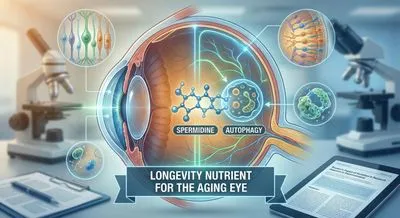
Spermidine : Une polyamine inductrice d'autophagie pour la santé oculaire La spermidine est une polyamine naturelle présente dans toutes les cellules...
Spermidine: An Autophagy-Inducing Polyamine for Eye Health Spermidine is a naturally occurring polyamine found in all cells and in many aging-friendly...
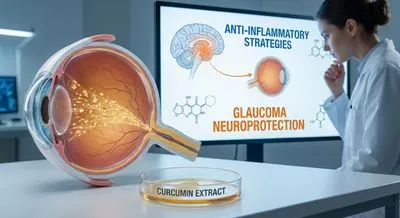
Curcumine et Curcuminoïdes pour la Neuroprotection du Glaucome Le glaucome est une neuropathie optique liée à l'âge, caractérisée par une perte progre...
Curcumin and Curcuminoids for Glaucoma Neuroprotection Glaucoma is an age-related optic neuropathy marked by progressive retinal ganglion cell (RGC) l...

Introduction La citicoline, également connue sous le nom de CDP-choline, est un composé naturel qui soutient la fonction des cellules nerveuses. Elle...
Introduction Citicoline, also known as CDP-choline, is a naturally occurring compound that supports nerve cell function. It serves as a key precursor...
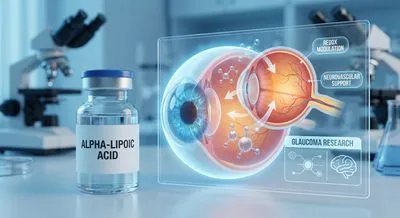
Alpha-Lipoic Acid in Glaucoma: A Neurovascular Antioxidant Strategy Glaucoma is a progressive optic neuropathy in which elevated intraocular pressure,...
L'acide alpha-lipoïque dans le glaucome : Une stratégie antioxydante neurovasculaire Le glaucome est une neuropathie optique progressive dans laquelle...
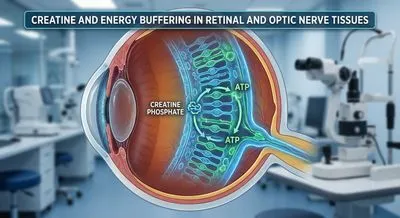
Introduction Retinal ganglion cells (RGCs) are the neurons that send visual signals from the eye to the brain. They rely on a high-energy metabolism b...
Introduction Les cellules ganglionnaires de la rétine (CGR) sont les neurones qui transmettent les signaux visuels de l'œil au cerveau. Elles dépenden...

Designing Multi-Ingredient Neuroprotective Formulations for Glaucoma Glaucoma is a complex optic neuropathy characterized by progressive death of reti...
Conception de Formulations Neuroprotectrices Multi-Ingrédients pour le Glaucome Le glaucome est une neuropathie optique complexe caractérisée par la m...
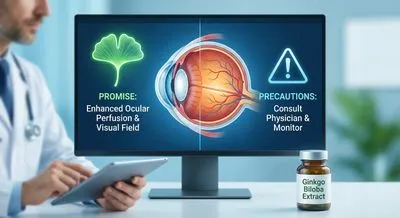
Ginkgo Biloba et perfusion oculaire dans le glaucome L'extrait de Ginkgo biloba (EGB) est un supplément botanique étudié depuis longtemps pour ses eff...
Ginkgo Biloba and Ocular Perfusion in Glaucoma Ginkgo biloba extract (GBE) is a botanical supplement long studied for its circulatory and neuroprotect...
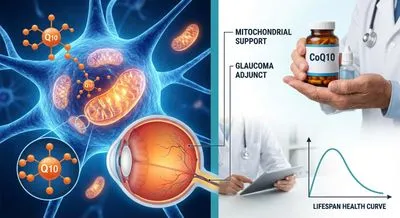
Introduction Le glaucome est une neuropathie optique progressive caractérisée par la mort des cellules ganglionnaires de la rétine (CGR) et une perte...
Introduction Glaucoma is a progressive optic neuropathy marked by retinal ganglion cell (RGC) death and visual field loss (pmc.ncbi.nlm.nih.gov). Alth...
5 मिनट से कम समय में अपना मुफ्त विज़ुअल फ़ील्ड टेस्ट शुरू करें।
अभी टेस्ट शुरू करेंNeuroprotection refers to strategies and treatments meant to protect nerve cells from damage, slow their degeneration, or help them recover after injury. In the context of the eye, it means trying to keep retinal ganglion cells and the optic nerve healthy so vision is preserved even when other risk factors, like eye pressure, are present. Approaches to neuroprotection include drugs that reduce harmful chemical reactions, improve energy production in cells, reduce inflammation, or boost blood flow and oxygen delivery to nerve tissue. Lifestyle measures, such as good cardiovascular health, healthy diet, and avoiding smoking, also support nerve health. Scientists are testing many ideas for neuroprotection, from medications and nutritional supplements to devices and gene therapies, but evidence varies and research is ongoing. Neuroprotection matters because once nerve cells are lost, they do not regrow easily, so preventing damage is often the best way to preserve function. In conditions where standard treatments do not fully stop progression, adding neuroprotective strategies could help maintain vision or slow decline. Discussing neuroprotection with a healthcare provider can help people understand realistic expectations and available options for protecting nerve health.