
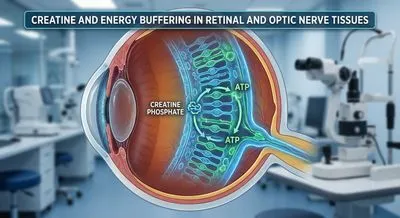
Creatine và Khả năng Đệm Năng lượng trong Mô Võng mạc và Thần kinh Thị giác
Điều quan trọng là hệ thống này không chỉ tồn tại ở cơ mà còn ở các tế bào thần kinh. Các tế bào thần kinh (bao gồm RGC) biểu hiện các dạng CK cho...
Nghiên cứu sâu và hướng dẫn chuyên gia về việc duy trì sức khỏe thị giác của bạn.
Điều quan trọng là hệ thống này không chỉ tồn tại ở cơ mà còn ở các tế bào thần kinh. Các tế bào thần kinh (bao gồm RGC) biểu hiện các dạng CK cho...
Các điểm mù thường phát triển dần dần mà không có triệu chứng. Bắt đầu dùng thử miễn phí và thực hiện bài kiểm tra thị trường nhanh để phát hiện những thay đổi sớm.
Tìm hiểu NgayCreatine là một hợp chất tự nhiên được tạo ra trong cơ thể từ các axit amin và cũng có trong một số thực phẩm như thịt và cá. Nó tồn tại chủ yếu trong cơ bắp và hoạt động như một kho dự trữ năng lượng ngắn hạn bằng cách tái tạo phân tử ATP — nguồn năng lượng trực tiếp cho co cơ. Trong các tình huống cần sức mạnh nhanh và ngắn hạn, như khi nâng tạ hoặc chạy nước rút, creatine giúp cung cấp năng lượng tức thời cho cơ bắp. Ngoài cơ, một lượng creatine cũng quan trọng cho các mô có nhu cầu năng lượng cao khác như não và các tế bào thần kinh. Nhiều người dùng creatine dạng bổ sung để tăng sức mạnh, tăng khối lượng cơ, cải thiện phục hồi sau tập và có thể hỗ trợ một số chức năng nhận thức. Các nghiên cứu cho thấy creatine thường an toàn khi dùng đúng liều, nhưng những người có vấn đề thận hoặc đang dùng thuốc nên tham khảo ý kiến bác sĩ trước khi dùng. Liều phổ biến khi bổ sung thường bắt đầu bằng giai đoạn nạp ngắn rồi chuyển sang liều duy trì hàng ngày. Creatine không phải là thuốc thần kỳ; tác dụng rõ rệt nhất ở những người tập luyện cường độ cao hoặc thiếu hụt tự nhiên. Tác dụng phụ thường gặp nếu có thường là tăng cân do giữ nước trong cơ bắp chứ không phải tăng mỡ. Nói chung, creatine quan trọng vì nó giúp tế bào nhanh chóng có lại năng lượng cần thiết, hỗ trợ hiệu năng thể chất và thậm chí giúp duy trì chức năng tế bào khi stress năng lượng xảy ra.