
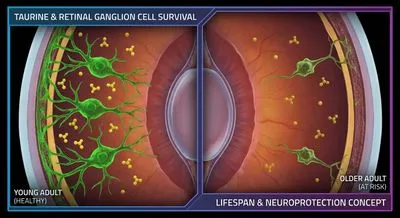
Taurine và Sự Sống Sót của Tế Bào Hạch Võng Mạc Trải Dài Tuổi Thọ
Taurine đóng các vai trò tế bào quan trọng ngoài việc là một chất dinh dưỡng. Trong võng mạc, nó hoạt động như một chất thẩm thấu hữu cơ, giúp tế bào...
Nghiên cứu sâu và hướng dẫn chuyên gia về việc duy trì sức khỏe thị giác của bạn.
Taurine đóng các vai trò tế bào quan trọng ngoài việc là một chất dinh dưỡng. Trong võng mạc, nó hoạt động như một chất thẩm thấu hữu cơ, giúp tế bào...
Bắt đầu bài kiểm tra thị trường miễn phí của bạn trong chưa đầy 5 phút.
Bắt đầu kiểm tra ngayTaurine là một phân tử nhỏ tự nhiên xuất hiện nhiều trong mô của cơ thể, đặc biệt ở thần kinh, tim và mắt. Nó không phải là protein nhưng đóng vai trò quan trọng như một chất hỗ trợ tế bào: ổn định màng tế bào, điều hòa áp suất thẩm thấu và bảo vệ tế bào khỏi các stress như oxy hóa. Taurine còn tham gia vào quá trình truyền tín hiệu thần kinh và giúp điều hòa hoạt động của ion bên trong và ngoài tế bào. Cơ thể có thể tổng hợp một phần taurine, nhưng với trẻ nhỏ, người già hoặc khi bệnh lý, nhu cầu có thể vượt quá khả năng tổng hợp nên cần nguồn từ thức ăn. Thực phẩm giàu taurine gồm thịt, cá và các sản phẩm từ động vật; nó cũng xuất hiện trong một số đồ uống bổ sung. Vì vai trò bảo vệ tế bào và điều hòa nước-muối, taurine có ý nghĩa lớn đối với sức khỏe tim mạch, chức năng thần kinh và thị lực. Nghiên cứu cho thấy mức taurine đủ giúp tế bào chống đỡ tốt hơn trước tổn thương và kéo dài khả năng sống của một số loại tế bào. Tuy nhiên, khi sử dụng ở dạng bổ sung cần cân nhắc liều lượng và tình trạng sức khỏe cá nhân. Hiểu rõ taurine giúp bạn biết tại sao một số chế độ ăn và thực phẩm chức năng nhắm đến việc cải thiện sức khỏe tim, mắt và hệ thần kinh.