
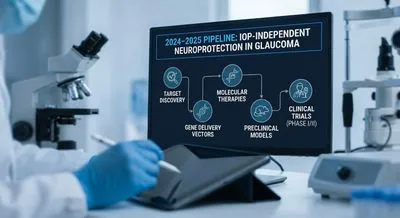
Le pipeline 2024-2025 pour la neuroprotection indépendante de la PIO dans le glaucome
Les thérapies géniques sont également à l'étude pour délivrer des signaux neurotrophiques. Une approche innovante a conçu une version active en...
Recherches approfondies et guides d'experts pour maintenir votre santé visuelle.
Les thérapies géniques sont également à l'étude pour délivrer des signaux neurotrophiques. Une approche innovante a conçu une version active en...
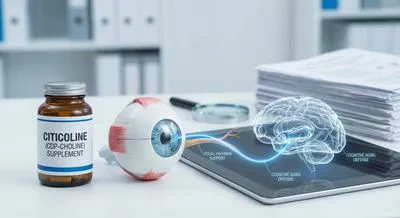
La citicoline (cytidine-5′-diphosphocholine) est métabolisée en cytidine et en choline dans le corps. La choline participe à la synthèse de la...
La perte du champ visuel due à des affections comme le glaucome peut passer inaperçue. Commencez un essai gratuit et dépistez d'éventuelles taches aveugles en quelques minutes.
La citicoline est une molécule naturelle présente dans le cerveau et utilisée comme complément ou médicament pour soutenir la santé cérébrale. Elle fournit des éléments dont le cerveau a besoin pour réparer les membranes cellulaires et produire l'acétylcholine, un neurotransmetteur important pour la mémoire et la communication entre neurones. On pense que la citicoline aide à maintenir la structure des cellules nerveuses et favorise la régénération des circuits endommagés après un stress ou un vieillissement. Des études suggèrent qu'elle peut améliorer certains aspects de la cognition, la concentration et la récupération après des lésions cérébrales, mais les effets varient selon les personnes et les situations. La molécule est généralement bien tolérée, mais il est important de respecter les recommandations de dosage et de vérifier les interactions possibles avec d'autres traitements. Les professionnels de santé évaluent les bénéfices attendus en regard des risques pour décider si la citicoline est adaptée à une personne donnée. Comprendre ce qu'elle fait permet de savoir pourquoi elle peut être prescrite ou conseillée pour soutenir la fonction cérébrale. En résumé, la citicoline est un soutien métabolique pour le cerveau, utilisé pour favoriser la réparation cellulaire et la transmission nerveuse, avec des bénéfices potentiels sur la cognition quand elle est utilisée de façon appropriée.