
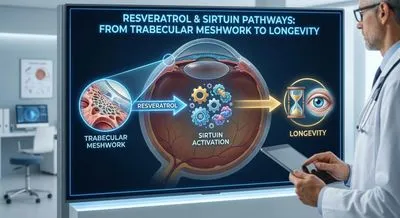
Resveratrols un Sirtuīnu Ceļi: No Trabekulārā Tīklojuma līdz Ilgmūžībai
TT audi darbojas kā acs drenāžas filtrs un glaukomā kļūst mazāk šūnu un vairāk disfunkcionāli. Hronisks oksidatīvais stress un iekaisums TT šūnās...
Dziļi pētījumi un ekspertu rokasgrāmatas par jūsu redzes veselības uzturēšanu.
TT audi darbojas kā acs drenāžas filtrs un glaukomā kļūst mazāk šūnu un vairāk disfunkcionāli. Hronisks oksidatīvais stress un iekaisums TT šūnās...
Redzes lauka zudums no tādām slimībām kā glaukoma var palikt nepamanīts. Sāciet bezmaksas izmēģinājumu un pārbaudiet iespējamās aklās zonas dažu minūšu laikā.
Sirtuīni ir proteīni, kas darbojas kā šūnu iekšējie regulatori un palīdz kontrolēt vielmaiņu, šūnu atjaunošanos un stresa reakcijas. Tie darbojas ar ķīmisku reakciju, kas ietekmē citus olbaltumvielu darbību, un šai aktivitātei bieži nepieciešams molekulas co-faktors, kas saistīts ar šūnas enerģijas stāvokli. Sirtuīnu darbība ir saistīta ar procesiem, kas ietekmē novecošanos un šūnu veselību, piemēram, DNS labošanas mehānismiem un enerģijas izmantošanu. Pētījumos ar augiem un dzīvniekiem ir redzams, ka sirtuīnu aktivēšana var uzlabot šūnu izturību pret stresu un reizēm pagarināt dzīves ilgumu. Tas padara šos proteīnus par interesantu mērķi medicīnai un veselības pētījumiem, jo tie var ietekmēt vielmaiņu, iekaisumu un vecumu saistītu slimību risku. Tomēr cilvēkos šo ietekmi vēl pilnībā neatrisina, un nepieciešami plašāki pētījumi, lai saprastu drošus un efektīvus veidus, kā tos ietekmēt. Svarīgi ir arī tas, ka sirtuīnu aktivitāte ir saistīta ar dzīvesveida faktoriem, piemēram, uzturu un fizisko slodzi, tādēļ veselīgi ieradumi var palīdzēt šo sistēmu atbalstīt. Kopumā sirtuīni ir būtiski šūnu regulēšanā un potenciāli svarīgi, lai saprastu, kā saglabāt veselību ilgtermiņā.