
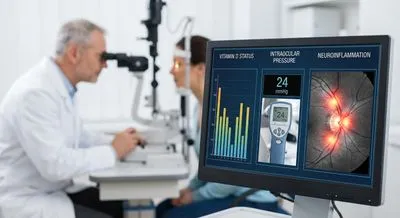
Статус вітаміну D, внутрішньоочний тиск та нейрозапалення
Кілька великих опитувань перевіряли, чи корелюють рівні вітаміну D з глаукомою. Наприклад, корейське дослідження скринінгу здоров'я за участю понад...
Глибокі дослідження та експертні посібники для підтримки здоров'я зору.
Кілька великих опитувань перевіряли, чи корелюють рівні вітаміну D з глаукомою. Наприклад, корейське дослідження скринінгу здоров'я за участю понад...
Сліпі плями часто розвиваються поступово без симптомів. Розпочніть безкоштовну пробну версію та пройдіть швидкий тест поля зору, щоб виявити зміни на ранній стадії.
Дізнатися заразВітамін D — це жиророзчинна речовина, яка відіграє ключову роль у здоров'ї кісток і регуляції кальцію в організмі. Він утворюється в шкірі під впливом сонячного світла і також надходить з деяких продуктів харчування і добавок. Окрім кісток, вітамін D впливає на імунну систему, запальні процеси та роботу м'язів. Його дефіцит пов'язують із підвищеним ризиком інфекцій, хронічних запалень і деяких хронічних захворювань. У медичній практиці вимір рівня вітаміну D допомагає оцінити ризики і прийняти рішення щодо додаткового прийому. Надлишок цього вітаміну також може бути шкідливим і призводити до порушення балансу кальцію, тому дозування має контролюватися. Простими способами підтримувати нормальний рівень є помірний сонячний вплив, збалансована їжа з джерелами D і, за потреби, добавки за рекомендацією лікаря. Для людей з певними захворюваннями або в регіонах із мало сонячного світла регулярний моніторинг може бути особливо важливим. Розуміння ролі вітаміну D допомагає приймати обґрунтовані рішення щодо здорового способу життя і профілактики хвороб.