
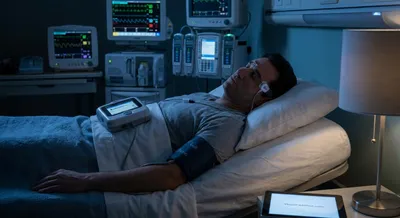
Nocturnal hypotension, sleep apnea, and ocular perfusion: continuous monitoring studies
Importantly, body position and sleep also matter. Normally, when you lie down, intraocular pressure (IOP) tends to rise (by 10–20%) because eye fluid...
Deep research and expert guides on maintaining your visual health.
Importantly, body position and sleep also matter. Normally, when you lie down, intraocular pressure (IOP) tends to rise (by 10–20%) because eye fluid...
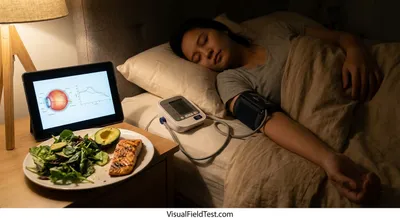
Research has shown that excessive night-time hypotension is associated with glaucomatous damage. In fact, Hayreh and colleagues found that night-time...
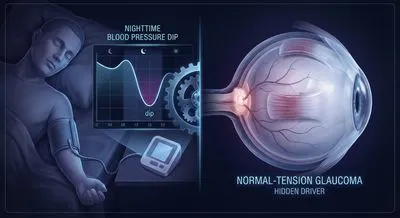
OPP is like the eye’s blood “fuel”. When systemic blood pressure (the “pump”) falls or eye pressure (“back pressure”) rises, OPP drops. Decades of...
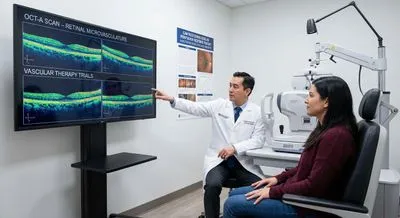
OCT-Angiography (OCT-A) captures images of blood flow by detecting moving red blood cells in the eye’s capillaries. Two key metrics are often...
Screen your peripheral vision from home — no downloads, no waiting rooms. Sign up for a free trial and test in under 5 minutes.
Nocturnal hypotension is when a person’s blood pressure falls too low during sleep. It is normal for blood pressure to drop somewhat at night, but in some people the fall is much larger than usual and can reduce blood flow to sensitive tissues. When blood flow drops, organs that need steady circulation—like the optic nerve at the back of the eye—may receive less oxygen and nutrients. Causes include taking blood-pressure medicines at night, certain medical conditions that affect blood pressure regulation, or natural exaggerated dipping patterns. Often there are few or no symptoms, so the condition can go unnoticed without monitoring. This matters because significant nighttime drops in blood pressure have been linked to worsening of conditions where steady blood flow is important, especially in vulnerable eyes. Detecting it typically requires 24-hour ambulatory blood pressure monitoring so a clinician can see the night-time pattern. Treatment may involve changing medication timing, adjusting doses, managing underlying health issues, or other strategies to keep overnight blood pressure from falling too far. If someone is at risk, talking with a healthcare provider about testing and safe adjustments can help protect vision and overall health.