
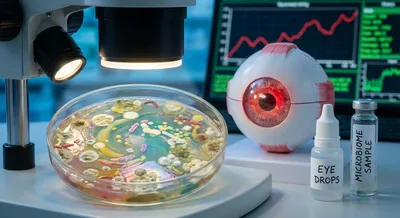
The Ocular Microbiome, Inflammaging, and Surface Health
Recent studies confirm that the mix of microbes on the eye changes with age. Using DNA sequencing, scientists showed that “young” and “old” adult...
Deep research and expert guides on maintaining your visual health.
Recent studies confirm that the mix of microbes on the eye changes with age. Using DNA sequencing, scientists showed that “young” and “old” adult...
Track peripheral vision changes between eye doctor visits. Start your free trial and get results in under 5 minutes.
Probiotics are live microorganisms, usually specific strains of bacteria or yeast, that people take to help support the community of microbes living in and on the body. They are most commonly thought of for gut health—found in fermented foods like yogurt and in supplement form—but researchers are exploring how they might influence other areas, including skin and immune responses. The basic idea is that introducing beneficial microbes can help balance the existing microbes, reduce harmful overgrowth, and support healthy inflammation control. Different strains do different things, so effects depend on which microorganisms are used and how they are taken. Probiotics matter because the microbes that live with us play roles in digestion, immune defense, and how our bodies react to stress and injury. For some people they can ease certain types of diarrhea, help with recovery after antibiotics, and support some digestive conditions. Evidence for other uses is still emerging, so they are not a cure-all and results can vary between products. It’s wise to choose reputable sources, follow guidance from health professionals, and be cautious if you have a severely weakened immune system or complex health issues.