
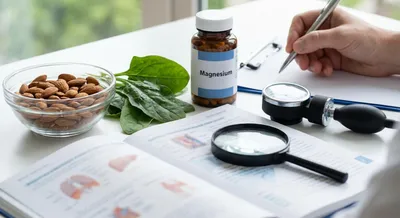
Magnesium and Glaucoma: A Systematic Review of Human Evidence
This article reviews all human studies on magnesium in glaucoma. Specifically, we look at trials and reports of magnesium levels or supplementation...
Deep research and expert guides on maintaining your visual health.
This article reviews all human studies on magnesium in glaucoma. Specifically, we look at trials and reports of magnesium levels or supplementation...
Blind spots often develop gradually without symptoms. Start a free trial and take a quick visual field test to spot changes early.
Find Out NowPrimary open-angle glaucoma is a common eye condition that slowly damages the optic nerve, the bundle of nerve fibers that sends visual information from the eye to the brain. In this condition, the drainage system inside the eye appears normal when examined, but fluid does not exit quickly enough, which may raise pressure inside the eye and injure the optic nerve over time. It usually develops gradually and painlessly, and early on many people do not notice any change in their vision, which is why it’s often called a “silent” disease. The first sign many people notice is loss of peripheral, or side, vision, and without treatment this can progress to central vision loss and irreversible blindness. Risk factors include older age, a family history of the condition, higher eye pressure, certain racial backgrounds, and other health issues such as thin corneas or blood circulation problems. Eye care professionals diagnose it with a combination of eye pressure measurement, optic nerve examination, visual field testing, and imaging of nerve fibers. Treatment focuses on lowering eye pressure to slow or stop nerve damage; this can be done with eye drops, laser procedures, or surgery depending on severity and response to treatment. Regular check-ups are important because early detection and consistent treatment greatly improve the chances of preserving vision. Managing other health conditions and sticking to prescribed therapies are key parts of taking care of your eyesight if you have this condition.