
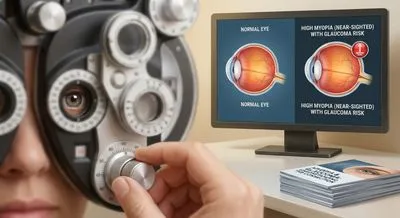
Myopia and Glaucoma: When Nearsightedness Raises the Stakes
Diagnosing glaucoma in myopic eyes is tricky. Moderate-to-high myopia changes the eye’s shape and anatomy, making standard glaucoma tests harder to...
Deep research and expert guides on maintaining your visual health.
Diagnosing glaucoma in myopic eyes is tricky. Moderate-to-high myopia changes the eye’s shape and anatomy, making standard glaucoma tests harder to...
Blind spots often develop gradually without symptoms. Start a free trial and take a quick visual field test to spot changes early.
Find Out NowNearsightedness is the everyday name for a condition where you see nearby things clearly but distant objects look fuzzy. It occurs when the eye focuses images in front of the light-sensitive layer at the back of the eye, usually because the eyeball is longer than normal or the cornea is too curved. Symptoms include trouble reading signs across the street, needing to sit near the front of a classroom, and squinting to recognize faces at a distance. Eye doctors measure how strong the correction needs to be and prescribe glasses or contact lenses to move the focus back onto the retina. For children, slowing the progression of nearsightedness is important to reduce the chance of severe vision problems later; methods include certain contact lens designs, low-dose eye drops, and more outdoor activity. It’s partly inherited, so knowing family history helps doctors plan monitoring and care. Many people manage it easily with correction and regular checkups, but high levels can lead to complications that require closer medical attention. Keeping up with eye exams ensures changes are noticed early and treated when needed.