
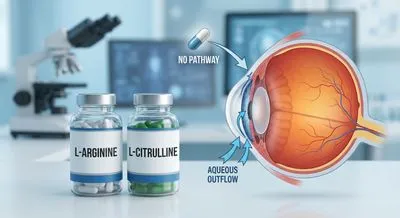
Nitric Oxide Pathway Supplements (L-Arginine, L-Citrulline) and Aqueous Outflow
The body also has a backup route to make NO from dietary nitrates (the “nitrate–nitrite–NO pathway”). Normally, under conditions like low oxygen or...
Deep research and expert guides on maintaining your visual health.
The body also has a backup route to make NO from dietary nitrates (the “nitrate–nitrite–NO pathway”). Normally, under conditions like low oxygen or...
Our visual field test is inspired by the perimetry methods eye care professionals use. Check for blind spots and track changes over time.
Test Your VisionDietary nitrate is a natural compound found in many vegetables, especially leafy greens and root vegetables like beetroot. When you eat these foods, bacteria in your mouth and enzymes in your body convert nitrate into nitrite and then into nitric oxide, a gas that helps relax and widen blood vessels. This widening improves blood flow and can lower blood pressure, which is one reason these vegetables are linked to heart health. The conversion process depends on your oral bacteria, so using strong antibacterial mouthwash can reduce the benefits. People often notice improved exercise performance and reduced fatigue after consuming nitrate-rich foods, because better blood flow can help deliver oxygen and nutrients to muscles. Unlike some additives in processed foods, the nitrate in vegetables comes with fiber, vitamins, and antioxidants that support overall health. There are some safety notes: extremely high intakes of processed nitrite-containing foods have been associated with harmful compounds, so whole vegetables are a healthier source. Also, people taking certain medications or with specific medical conditions should check with a healthcare provider before trying concentrated nitrate supplements. In short, dietary nitrate from vegetables is a simple, natural way to support circulation and general wellbeing when eaten as part of a balanced diet.