
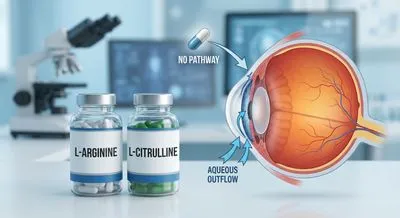
Supplementen voor de Stikstofmonoxide-route (L-Arginine, L-Citrulline) en de Afvoer van Kamerwater
Het lichaam heeft ook een alternatieve route om NO te maken uit nitraten uit de voeding (de "nitraat-nitriet-NO-route"). Normaal gesproken, onder...
Diepgaand onderzoek en expertgidsen voor het behoud van je visuele gezondheid.
Het lichaam heeft ook een alternatieve route om NO te maken uit nitraten uit de voeding (de "nitraat-nitriet-NO-route"). Normaal gesproken, onder...
Ons gezichtsveldonderzoek is geïnspireerd op de perimetriemethoden die oogzorgprofessionals gebruiken. Controleer op blinde vlekken en volg veranderingen in de tijd.
Test uw zichtL-arginine is een aminozuur dat van nature in je lichaam voorkomt en ook via voedsel wordt opgenomen. Het helpt bij de aanmaak van stikstofmonoxide, een molecuul dat bloedvaten ontspant en zo de bloedstroom verbetert. Omdat het de doorbloeding kan verbeteren, wordt L-arginine vaak genoemd in verband met hartgezondheid, sportprestaties en herstel. Het speelt ook een rol in het afweersysteem en bij wondgenezing. Je vindt L-arginine in voedingsmiddelen zoals vlees, gevogelte, vis en zuivel, en het is ook beschikbaar als supplement. Sommige mensen gebruiken supplementen om hun energie, uithoudingsvermogen of seksuele functie te ondersteunen, maar de effecten verschillen per persoon. Bij hogere doses kunnen bijwerkingen optreden, zoals maagklachten, diarree of een verlaging van de bloeddruk. Mensen met nieraandoeningen, hartproblemen of die bloeddrukmedicijnen gebruiken, moeten eerst met een arts overleggen voordat ze beginnen. De juiste dosering hangt af van het doel en van de persoonlijke gezondheidstoestand, daarom is professioneel advies belangrijk. Kortom: L-arginine is een nuttig bouwstof voor het lichaam met mogelijke voordelen voor de doorbloeding, maar het is verstandig om voorzichtig te zijn en medische begeleiding te zoeken wanneer nodig.