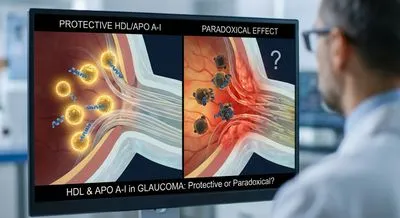
HDL-kolesterol og apolipoprotein A-I: beskyttende eller paradoksalt ved glaukom?
HDL-kolesterol, ApoA-I og glaukom – ven eller fjende? Glaukom – en førende årsag til synstab – påvirkes ikke kun af øjentryk, men også af blodgennemst...
Глибокі дослідження та експертні посібники для підтримки здоров'я зору.
HDL-kolesterol, ApoA-I og glaukom – ven eller fjende? Glaukom – en førende årsag til synstab – påvirkes ikke kun af øjentryk, men også af blodgennemst...
एचडीएल कोलेस्ट्रॉल, ApoA-I और ग्लूकोमा – दोस्त या दुश्मन? ग्लूकोमा – दृष्टि हानि का एक प्रमुख कारण – न केवल आँखों के दबाव से, बल्कि आँखों में रक्त प्र...
Colesterol HDL, ApoA-I y Glaucoma – ¿Amigo o Enemigo? El glaucoma – una de las principales causas de pérdida de visión – está influenciado no solo por...
كوليسترول HDL وأبو بروتين A-I والجلوكوما – صديق أم عدو؟ الجلوكوما – أحد الأسباب الرئيسية لفقدان البصر – لا تتأثر بضغط العين فحسب، بل أيضًا بتدفق الدم...
คอเลสเตอรอล HDL, ApoA-I และโรคต้อหิน – มิตรหรือศัตรู? โรคต้อหิน ซึ่งเป็นสาเหตุสำคัญของการสูญเสียการมองเห็น ไม่ได้ขึ้นอยู่กับความดันลูกตาเท่านั้น แต่ยั...
HDL Koleszterin, ApoA-I és Glaukóma – Barát vagy Ellenség? Glaukóma – a látásvesztés egyik vezető oka – nemcsak a szembnyomás, hanem a szem véráramlás...
HDL-kolesteroli, ApoA-I ja glaukooma – ystävä vai vihollinen? Glaukooma – merkittävä näönmenetyksen syy – vaikuttaa silmänpaineen lisäksi myös silmän...
HDL holesterīns, ApoA-I un glaukoma – draugs vai ienaidnieks? Glaukoma – galvenais redzes zuduma cēlonis – ietekmē ne tikai acu spiediens, bet arī asi...
HDL-kolesterool, ApoA-I ja glaukoom – sõber või vaenlane? Glaukoom – peamine nägemiskaotuse põhjus – ei ole mõjutatud mitte ainult silmarõhust, vaid k...
Colesterolul HDL, ApoA-I și Glaucomul – Prieten sau Dușman? Glaucomul – o cauză principală de pierdere a vederii – este influențat nu numai de presiun...
HDLコレステロール、ApoA-I、緑内障 – 友か敵か? 緑内障は視力喪失の主要な原因であり、眼圧だけでなく眼内の血流や炎症によっても影響を受けます。一部の研究者は、HDLコレステロール(しばしば「善玉コレステロール」と呼ばれる)とその主要なタンパク質成分であるアポリポタンパク質A-I(ApoA-...
HDL-kolesterol, ApoA-I och glaukom – vän eller fiende? Glaukom – en ledande orsak till synförlust – påverkas inte bara av ögontrycket utan också av bl...
HDL-cholesterol, ApoA-I en glaucoom – Vriend of vijand? Glaucoom – een belangrijke oorzaak van gezichtsverlies – wordt niet alleen beïnvloed door de o...
Cholesterol HDL, ApoA-I i jaskra – przyjaciel czy wróg? Jaskra – główna przyczyna utraty wzroku – jest uzależniona nie tylko od ciśnienia w oku, ale t...
Colesterolo HDL, ApoA-I e Glaucoma – Amico o Nemico? Il glaucoma – una delle principali cause di perdita della vista – è influenzato non solo dalla pr...
HDL 콜레스테롤, ApoA-I 및 녹내장 – 친구일까, 적일까? 녹내장은 시력 상실의 주요 원인 중 하나로, 안압뿐만 아니라 안구의 혈류 및 염증에 의해서도 영향을 받습니다. 일부 연구자들은 흔히 "좋은 콜레스테롤"이라고 불리는 HDL 콜레스테롤과 그 주요 단백질 구...
HDL-Cholesterin, ApoA-I und Glaukom – Freund oder Feind? Glaukom – eine Hauptursache für Sehverlust – wird nicht nur durch den Augeninnendruck, sonder...
高密度脂蛋白胆固醇、载脂蛋白A-I与青光眼——是敌是友? 青光眼是导致视力丧失的主要原因之一,其发生不仅受眼压影响,还与眼部血流和炎症有关。一些研究人员正在探讨,高密度脂蛋白胆固醇(常被称为“好胆固醇”)及其主要蛋白质成分载脂蛋白A-I (ApoA-I)是否能帮助保护视神经,或者在某些条件下它们是否...
Почніть безкоштовний тест поля зору менш ніж за 5 хвилин.
Почати тест заразOptical coherence tomography angiography is an imaging technique that shows blood flow in the tiny vessels of the eye without needing injected dye. It works by taking many rapid cross-sectional scans and detecting subtle differences caused by moving blood cells, then building a map of the vascular networks. The result is a detailed picture of the superficial and deeper capillary layers in the retina and around the optic nerve. Because it does not require contrast dye, the test is faster and safer for many patients and can be repeated often to track changes. Clinicians use it to spot early signs of diseases that affect blood vessels in the eye, such as diabetic retinopathy, age-related macular degeneration, and glaucoma. Seeing the microvasculature helps doctors understand disease activity, decide on treatments, and monitor how well therapies are working. The images can reveal vessel loss, abnormal new vessel growth, and regions with poor blood flow that might not be obvious on other scans. However, the technique can produce artifacts from eye movement, blinking, or poor image quality, so results must be interpreted carefully. It also has limited ability to show leakage, which some other tests can demonstrate more directly. Despite its limitations, this technology has become an important, noninvasive tool for eye care and research.