
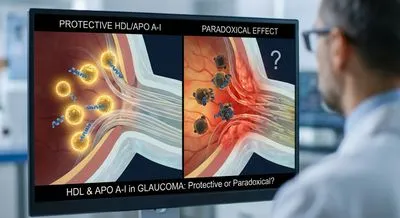
HDL cholesterol a apolipoprotein A-I: ochranné nebo paradoxní u glaukomu?
HDL cholesterol, ApoA-I a glaukom – přítel, nebo nepřítel? Glaukom – hlavní příčina ztráty zraku – je ovlivněn nejen nitroočním tlakem, ale také průto...
Глубокие исследования и экспертные руководства по поддержанию здоровья зрения.
HDL cholesterol, ApoA-I a glaukom – přítel, nebo nepřítel? Glaukom – hlavní příčina ztráty zraku – je ovlivněn nejen nitroočním tlakem, ale také průto...
Colesterol HDL, ApoA-I e Glaucoma – Amigo ou Inimigo? Glaucoma – uma das principais causas de perda de visão – é influenciado não apenas pela pressão...
HDL-kolesterol, ApoA-I og glaukom – venn eller fiende? Glaukom – en ledende årsak til synstap – påvirkes ikke bare av øyetrykk, men også av blodstrøm...
Χοληστερόλη HDL, ApoA-I και Γλαύκωμα – Φίλος ή Εχθρός; Το Γλαύκωμα – μια κύρια αιτία απώλειας όρασης – επηρεάζεται όχι μόνο από την πίεση του ματιού α...
DTL cholesterolis, ApoA-I ir glaukoma – draugas ar priešas? Glaukomą – pagrindinę regėjimo praradimo priežastį – veikia ne tik akispūdis, bet ir krauj...
Cholestérol HDL, ApoA-I et Glaucome – Ami ou Ennemi? Le glaucome – une cause majeure de perte de vision – est influencé non seulement par la pression...
Kolesterol HDL, ApoA-I, dan Glaukoma – Kawan atau Musuh? Glaukoma – penyebab utama kehilangan penglihatan – tidak hanya dipengaruhi oleh tekanan mata...
HDL Cholesterol, ApoA-I and Glaucoma – Friend or Foe? Glaucoma – a leading cause of vision loss – is influenced not only by eye pressure but also by b...
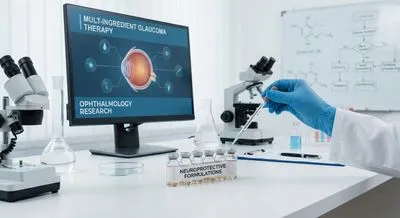
تصميم تركيبات متعددة المكونات للحماية العصبية للزرق الزرق هو اعتلال عصبي بصري معقد يتميز بموت تدريجي لخلايا العقدة الشبكية (RGCs) وفقدان في المجال الب...
Het ontwerpen van neuroprotectieve formuleringen met meerdere ingrediënten voor glaucoom Glaucoom is een complexe optische neuropathie die wordt geken...
การออกแบบสูตรผสมสารหลายชนิดเพื่อการปกป้องระบบประสาทตาสำหรับต้อหิน ต้อหิน (Glaucoma) เป็นโรคเส้นประสาทตาที่ซับซ้อน ซึ่งมีลักษณะเฉพาะคือการตายของเซลล์ปม...
Glaukoomi mitmekomponendiliste neuroprotektiivsete preparaatide kavandamine Glaukoom on keeruline optiline neuropaatia, mida iseloomustab võrkkesta ga...
Thiết Kế Các Công Thức Bảo Vệ Thần Kinh Đa Thành Phần Cho Bệnh Glaucoma Glaucoma (Thiên đầu thống/Cườm nước) là một bệnh thần kinh thị giác phức tạp,...
设计用于青光眼的多成分神经保护配方 青光眼是一种复杂的视神经病变,其特征是视网膜神经节细胞 (RGCs) 进行性死亡和视野丧失。其发病机制不仅涉及眼内压 (IOP) 升高,还包括氧化应激、线粒体功能障碍、神经炎症和血管调节紊乱 (pmc.ncbi.nlm.nih.gov)。这种多因素生物学为多靶点疗...
녹내장 다성분 신경보호 제제 설계 녹내장은 진행성 망막신경절세포(RGCs) 사멸과 시야 손실을 특징으로 하는 복합적인 시신경병증입니다. 그 병태생리는 상승된 안압(IOP)뿐만 아니라 산화 스트레스, 미토콘드리아 기능 장애, 신경 염증, 그리고 혈관 기능 이상을 포함합니...
Glaukooman monikomponenttisten neuroprotektiivisten formulaatioiden suunnittelu Glaukooma on monimutkainen optinen neuropatia, jolle on ominaista verk...
緑内障のための多成分神経保護製剤の設計 緑内障は、網膜神経節細胞(RGC)の進行性死滅と視野の喪失を特徴とする複雑な視神経症です。その病態には、眼圧(IOP)の上昇だけでなく、酸化ストレス、ミトコンドリア機能障害、神経炎症、血管調節不全も関与しています(pmc.ncbi.nlm.nih.gov)。こ...
Utformning av neuroprotektiva formuleringar med flera ingredienser för glaukom Glaukom är en komplex optisk neuropati som kännetecknas av progressiv d...
Начните бесплатный тест поля зрения менее чем за 5 минут.
Начать тест сейчасOptical coherence tomography angiography is an imaging technique that shows blood flow in the tiny vessels of the eye without needing injected dye. It works by taking many rapid cross-sectional scans and detecting subtle differences caused by moving blood cells, then building a map of the vascular networks. The result is a detailed picture of the superficial and deeper capillary layers in the retina and around the optic nerve. Because it does not require contrast dye, the test is faster and safer for many patients and can be repeated often to track changes. Clinicians use it to spot early signs of diseases that affect blood vessels in the eye, such as diabetic retinopathy, age-related macular degeneration, and glaucoma. Seeing the microvasculature helps doctors understand disease activity, decide on treatments, and monitor how well therapies are working. The images can reveal vessel loss, abnormal new vessel growth, and regions with poor blood flow that might not be obvious on other scans. However, the technique can produce artifacts from eye movement, blinking, or poor image quality, so results must be interpreted carefully. It also has limited ability to show leakage, which some other tests can demonstrate more directly. Despite its limitations, this technology has become an important, noninvasive tool for eye care and research.