
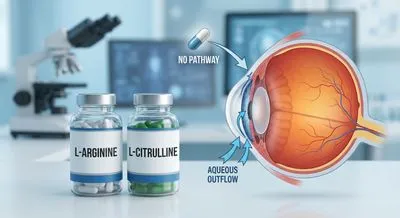
Supplementen voor de Stikstofmonoxide-route (L-Arginine, L-Citrulline) en de Afvoer van Kamerwater
Het lichaam heeft ook een alternatieve route om NO te maken uit nitraten uit de voeding (de "nitraat-nitriet-NO-route"). Normaal gesproken, onder...
Diepgaand onderzoek en expertgidsen voor het behoud van je visuele gezondheid.
Het lichaam heeft ook een alternatieve route om NO te maken uit nitraten uit de voeding (de "nitraat-nitriet-NO-route"). Normaal gesproken, onder...
Ons gezichtsveldonderzoek is geïnspireerd op de perimetriemethoden die oogzorgprofessionals gebruiken. Controleer op blinde vlekken en volg veranderingen in de tijd.
Test uw zichtL-citrulline is een aminozuur dat in het lichaam kan worden omgezet in L-arginine, waardoor het indirect de productie van stikstofmonoxide stimuleert. Dit proces maakt L-citrulline belangrijk voor het reguleren van de bloedstroom en het ondersteunen van de vaatfunctie. Het komt ook in sommige voedingsmiddelen voor, met name in watermeloen, en is daarnaast verkrijgbaar als supplement. Veel mensen kiezen voor L-citrulline omdat het vaak effectiever is dan directe L-arginine-supplementen om de arginine-spiegel in het lichaam te verhogen. Daarmee kan het helpen bij sportprestaties, herstel na inspanning en het verminderen van vermoeidheid. De meeste bijwerkingen zijn mild, zoals maagklachten, maar bij gebruik in combinatie met medicijnen die de bloeddruk verlagen moet je voorzichtig zijn. Bij mensen met bepaalde gezondheidsproblemen, zoals nier- of leveraandoeningen, is het verstandig eerst een arts te raadplegen. Dosis en gebruiksduur beïnvloeden de werking, dus het helpt om betrouwbare informatie of professioneel advies te vragen voordat je begint. Kort gezegd is L-citrulline een slimme manier om de stikstofmonoxide-route te ondersteunen en zo de doorbloeding en het herstel te bevorderen. Het is een natuurlijke optie die in veel gevallen veiliger en effectiever kan zijn dan directe arginine-supplementen, mits correct toegepast.