
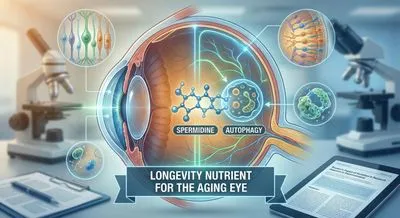
Spermidine en Autofagie: Een Levensverlengende Voedingsstof voor het Ouder Wordende Oog
Door autofagie te induceren, helpt spermidine cellen om beschadigde componenten op te ruimen en de mitochondriale gezondheid te handhaven. Zo...
Diepgaand onderzoek en expertgidsen voor het behoud van je visuele gezondheid.
Door autofagie te induceren, helpt spermidine cellen om beschadigde componenten op te ruimen en de mitochondriale gezondheid te handhaven. Zo...
Volg veranderingen in het perifere zicht tussen oogartsbezoeken door. Start uw gratis proefperiode en krijg resultaten in minder dan 5 minuten.
Polyamines zijn kleine organische verbindingen die van nature in alle levende cellen voorkomen en belangrijke rollen vervullen in celgroei en -functie. De bekendste voorbeelden zijn putrescine, spermidine en spermine, die chemisch verwant zijn maar verschillende functies in de cel hebben. Ze binden aan DNA en RNA, helpen bij de stabiliteit van genetisch materiaal en beïnvloeden de productie van eiwitten en de vorming van nieuwe cellen. Polyamines spelen ook een rol bij het reguleren van celherstelprocessen, zoals autofagie, waarbij beschadigde onderdelen van cellen worden opgeruimd en gerecycled. De concentratie van polyamines verandert met leeftijd en gezondheid; bij ouder worden kunnen de niveaus dalen, wat invloed heeft op het herstelvermogen van weefsels. Omdat ze betrokken zijn bij basisprocessen van het leven, zijn polyamines onderwerp van onderzoek naar veroudering, zenuwbescherming en weefselherstel. Ze komen van nature voor in voedsel, vooral in gefermenteerde producten, bepaalde kazen, sojaproducten en in dierenlijke cellen, en sommige mensen nemen ze aan via supplementen. Hoewel ze voordelen hebben, kan een te hoge concentratie in bepaalde situaties bijdragen aan ongewenste celgroei, waardoor hun gebruik en regulatie zorgvuldig onderzocht wordt. Polyamines zijn belangrijk omdat ze direct invloed hebben op hoe cellen zich aanpassen aan stress en herstellen na schade, en dus van invloed kunnen zijn op gezondheid en ziektepreventie. Wetenschappelijk onderzoek probeert nu te begrijpen hoe veranderingen in polyaminehuishouding gebruikt kunnen worden om ouderdomsgerelateerde aandoeningen te vertragen of te behandelen. Als je overweegt voedingsbronnen of supplementen met polyamines te gebruiken, is het verstandig dit te bespreken met een arts, omdat de balans en context belangrijk zijn voor veilig gebruik.