

Peptiden afgeleid van heat shock-eiwitten en auto-immuniteit bij glaucoom
Er zijn aanwijzingen dat T-cellen (een type witte bloedcel) die reageren tegen HSP's de oogzenuw kunnen beschadigen. Patiëntenstudies hebben...
Diepgaand onderzoek en expertgidsen voor het behoud van je visuele gezondheid.
Er zijn aanwijzingen dat T-cellen (een type witte bloedcel) die reageren tegen HSP's de oogzenuw kunnen beschadigen. Patiëntenstudies hebben...
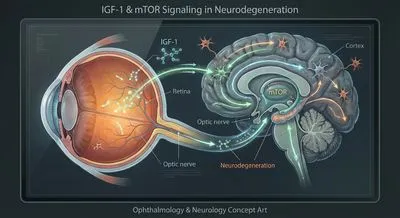
IGF-1 is een klein eiwithormoon dat nauw verwant is aan insuline. Het wordt in de lever (en in sommige weefsels) aangemaakt onder invloed van...
Blinde vlekken ontwikkelen zich vaak geleidelijk en zonder symptomen. Start een gratis proefperiode en doe een snelle gezichtsveldtest om veranderingen vroegtijdig op te sporen.
Kom er nu achterBiomarkers zijn meetbare aanwijzingen in het lichaam die iets zeggen over gezondheid of ziekte. Ze kunnen voorkomen in bloed, urine, weefsel of in beeldvormende scans en variëren van eiwitten en genen tot fysiologische signalen. Met biomarkers kun je een aandoening opsporen, de ernst ervan inschatten of volgen hoe goed een behandeling werkt. Een bekend voorbeeld is bloedsuiker als indicator voor diabetes; een ander voorbeeld is cholesterol als risicofactor voor hart- en vaatziekten. In de medische praktijk helpen biomarkers bij het stellen van diagnoses, het voorspellen van ziekteverloop en het kiezen van de meest geschikte behandeling. In onderzoek zijn biomarkers cruciaal om nieuwe medicijnen te testen en om te begrijpen welke biologische processen betrokken zijn bij ziekten. Niet elke biomarker is even betrouwbaar; ze moeten zorgvuldig worden gevalideerd voordat ze breed gebruikt worden. Soms is een combinatie van meerdere biomarkers nodig om een betrouwbare uitspraak te doen. Er zijn ook ethische en praktische vragen, zoals privacy van genetische informatie en de kosten van testen. Desondanks zijn biomarkers een belangrijk hulpmiddel geworden voor preciezere, meer gepersonaliseerde geneeskunde, waardoor behandelingen effectiever kunnen worden gemaakt en problemen vaak eerder worden aangepakt.