
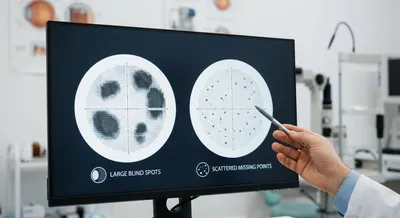
Modelli di Perdita della Vista nel Glaucoma: Ampi Punti Ciechi Contro Punti Mancanti Diffusi
Difetti diffusi o sparsi (perdite a piccoli punti) – Altri pazienti mostrano molti punti isolati di perdita di sensibilità sparsi nel campo, spesso...
Ricerca approfondita e guide di esperti per mantenere la tua salute visiva.
Difetti diffusi o sparsi (perdite a piccoli punti) – Altri pazienti mostrano molti punti isolati di perdita di sensibilità sparsi nel campo, spesso...
Tes lapang pandang kami terinspirasi oleh metode perimetri yang digunakan oleh profesional perawatan mata. Periksa bintik buta dan lacak perubahan seiring waktu.
Uji Penglihatan AndaUno scotoma è un'area del campo visivo dove la visione è ridotta o assente rispetto al resto del campo. Può apparire come una macchia scura, una zona offuscata o un punto mancante e può trovarsi al centro, vicino al centro o nella periferia del campo visivo. Esistono scotomi temporanei, come quelli che si verificano durante l'aura dell'emicrania, e scotomi permanenti causati da malattie della retina o del nervo ottico. Le dimensioni e la posizione dello scotoma determinano quanto influisce sulle attività quotidiane: uno scotoma centrale può rendere difficile leggere o riconoscere volti, mentre uno periferico può ostacolare la mobilità. Per identificare uno scotoma si usano esami specifici che mappano la sensibilità visiva, e il medico valuterà anche la possibile causa con esami oculari e neurologici. Il trattamento dipende dall'origine: alcune condizioni possono migliorare con terapie mirate, altre richiedono interventi per prevenire un peggioramento e strategie riabilitative per compensare la perdita. Tecniche di adattamento, come spostare lo sguardo, usare ausili ottici o imparare nuove abitudini visive, possono aiutare a ridurre l'impatto sulla vita quotidiana. È importante rivolgersi a un professionista appena si notano aree mancanti nella visione per ottenere una diagnosi e un piano di cura adeguato.