
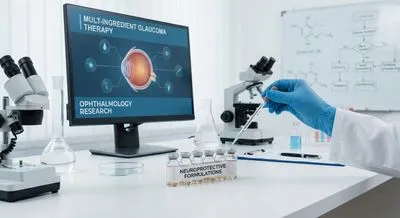
Designing Multi-Ingredient Neuroprotective Formulations for Glaucoma
Designing Multi-Ingredient Neuroprotective Formulations for Glaucoma Glaucoma is a complex optic neuropathy characterized by progressive death of reti...
Глибокі дослідження та експертні посібники для підтримки здоров'я зору.
Designing Multi-Ingredient Neuroprotective Formulations for Glaucoma Glaucoma is a complex optic neuropathy characterized by progressive death of reti...
Progettazione di formulazioni neuroprotettive multi-ingrediente per il glaucoma Il glaucoma è una complessa neuropatia ottica caratterizzata dalla mor...
Többkomponensű neuroprotektív készítmények tervezése glaukóma kezelésére A glaukóma egy összetett optikai neuropátia, amelyet a retina ganglionsejtek...
Projektowanie wieloskładnikowych preparatów neuroprotekcyjnych w jaskrze Jaskra to złożona neuropatia nerwu wzrokowego charakteryzująca się postępując...
Entwicklung von Neuroprotektiven Multi-Inhaltsstoff-Formulierungen für Glaukom Glaukom ist eine komplexe Optikusneuropathie, die durch den fortschreit...
Proiectarea Formulărilor Neuroprotectoare cu Ingrediente Multiple pentru Glaucom Glaucomul este o neuropatie optică complexă, caracterizată prin moart...
Σχεδιασμός Συνθέσεων Νευροπροστατευτικών Συμπληρωμάτων Πολλαπλών Συστατικών για το Γλαύκωμα Το γλαύκωμα είναι μια σύνθετη οπτική νευροπάθεια που χαρακ...
Desenho de Formulações Neuroprotetoras Multi-Ingredientes para Glaucoma O glaucoma é uma neuropatia óptica complexa caracterizada pela morte progressi...
Merancang Formulasi Neuroprotektif Multi-Bahan untuk Glaukoma Glaukoma adalah neuropati optik kompleks yang ditandai dengan kematian progresif sel gan...
Navrhování vícesložkových neuroprotektivních formulací pro glaukom Glaukom je komplexní optická neuropatie charakterizovaná progresivní smrtí gangliov...
ग्लूकोमा के लिए बहु-घटक न्यूरोप्रोटेक्टिव फ़ॉर्मूलेशन डिज़ाइन करना ग्लूकोमा एक जटिल ऑप्टिक न्यूरोपैथी है जिसकी विशेषता रेटिनल गैंग्लियन कोशिकाओं (RGCs...
Utforming av flerkomponent nevrobeskyttende formuleringer mot glaukom Glaukom er en kompleks optisk nevropati preget av progressiv død av retinale gan...
Conception de Formulations Neuroprotectrices Multi-Ingrédients pour le Glaucome Le glaucome est une neuropathie optique complexe caractérisée par la m...
Diseño de formulaciones neuroprotectoras con múltiples ingredientes para el glaucoma El glaucoma es una neuropatía óptica compleja caracterizada por l...
Почніть безкоштовний тест поля зору менш ніж за 5 хвилин.
Почати тест заразOptical coherence tomography angiography is an imaging technique that shows blood flow in the tiny vessels of the eye without needing injected dye. It works by taking many rapid cross-sectional scans and detecting subtle differences caused by moving blood cells, then building a map of the vascular networks. The result is a detailed picture of the superficial and deeper capillary layers in the retina and around the optic nerve. Because it does not require contrast dye, the test is faster and safer for many patients and can be repeated often to track changes. Clinicians use it to spot early signs of diseases that affect blood vessels in the eye, such as diabetic retinopathy, age-related macular degeneration, and glaucoma. Seeing the microvasculature helps doctors understand disease activity, decide on treatments, and monitor how well therapies are working. The images can reveal vessel loss, abnormal new vessel growth, and regions with poor blood flow that might not be obvious on other scans. However, the technique can produce artifacts from eye movement, blinking, or poor image quality, so results must be interpreted carefully. It also has limited ability to show leakage, which some other tests can demonstrate more directly. Despite its limitations, this technology has become an important, noninvasive tool for eye care and research.