
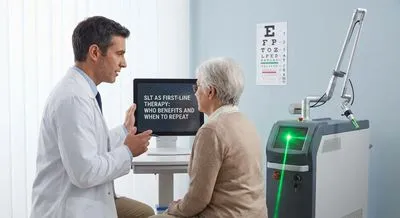
SLT som førstebehandling: Hvem drager fordel, og hvornår skal det gentages
Det skelsættende LiGHT-studie (Lancet 2019) sammenlignede førstebehandling med SLT med øjendråber hos nydiagnosticerede glaukom/okulær hypertension...
Dybtgående forskning og ekspertguider til vedligeholdelse af dit syn.
Det skelsættende LiGHT-studie (Lancet 2019) sammenlignede førstebehandling med SLT med øjendråber hos nydiagnosticerede glaukom/okulær hypertension...
Baseline IOP er den indledende måling af trykket inde i øjet, målt før der sættes ind med behandling. IOP måles i millimeter kviksølv (mmHg) og fungerer som referencepunkt for at vurdere, om en behandling virker. Når lægen ved, hvad udgangstrykket er, kan man fastsætte realistiske mål for hvor meget trykket skal sænkes. Det er vigtigt, fordi højere udgangstryk ofte betyder større risiko for, at synsnerven beskadiges over tid. Baseline-målingen hjælper også med at følge udvikling og sammenligne gentagne målinger ved senere kontroller. Da trykket kan variere i løbet af dagen og med forskellige målemetoder, anbefales ofte flere målinger før man fastsætter et definitivt baseline. Der tages også hensyn til andre faktorer som hornhindens tykkelse, som kan påvirke målingens nøjagtighed. At have en klar baseline gør det lettere at vurdere behandlingseffekt og tilpasse planen for at beskytte synet bedst muligt.