
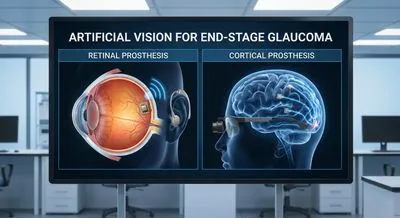
İleri Evre Glokomda Yapay Görme: Retinal ve Kortikal Protezler
Retinitis pigmentosa veya makula dejenerasyonu gibi durumlarda fotoreseptörler ölür ancak RGH'ler ve optik sinir sağlam kalır () (). Retinal...
Görsel sağlığınızı korumak için derinlemesine araştırma ve uzman kılavuzları.
Retinitis pigmentosa veya makula dejenerasyonu gibi durumlarda fotoreseptörler ölür ancak RGH'ler ve optik sinir sağlam kalır () (). Retinal...
Kör noktalar genellikle belirti vermeden kademeli olarak gelişir. Ücretsiz deneme başlatın ve değişiklikleri erken fark etmek için hızlı bir görme alanı testi yapın.
Şimdi ÖğreninRetinal implant, retina adı verilen gözün arka yüzeyine yerleştirilen elektronik bir cihazdır. Amaç, retina hücreleri veya optik sinir zarar gördüğünde görme sinyallerini yeniden oluşturmaya yardımcı olmaktır. Cihaz, dışarıdaki ışığı veya bir kameradan gelen görüntü bilgilerini elektriksel uyarılara dönüştürerek retina üzerindeki hayatta kalan hücreleri uyarır. Bu uyarılar beyne iletilerek kullanıcıya ışık, kontrast ve temel şekiller algısı sağlayabilir. Herkes için tamamen normal görüş sağlamasa da karanlıkta yön bulma, nesne ayırt etme ve bağımsız hareket etme gibi işlevlerde büyük fayda sunabilir. Ameliyat, cihazın yerleştirilmesini ve sonraki ayarlamaları gerektirir; ayrıca kullanıcının beyinle yeniden eşleşme sürecine uyum sağlaması önemlidir. Cihazın çözünürlüğü ve performansı halen sınırlıdır ama teknoloji ilerledikçe daha iyi sonuçlar bekleniyor. Biyouyumluluk, pil ömrü ve uzun vadeli stabilite gibi teknik konular üzerinde çalışmalar sürüyor. Retinal implantlar görmeyi yeniden kazanma umudu taşıyan insanlara pratik bir seçenek sunar ve görme rehabilitasyonunda yeni imkanlar açar.