
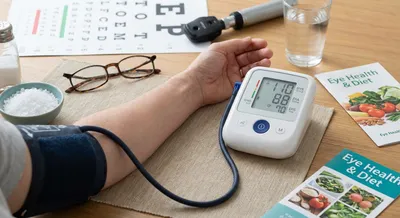
Natrium, Blodtryk og Okulær Perfusion: Kostsalt i Glaukombehandling
For eksempel fandt en stor gennemgang “stærke sammenhænge mellem lavt okulært perfusionstryk og åbenvinklet glaukom” – i befolkningsstudier havde...
Dybtgående forskning og ekspertguider til vedligeholdelse af dit syn.
For eksempel fandt en stor gennemgang “stærke sammenhænge mellem lavt okulært perfusionstryk og åbenvinklet glaukom” – i befolkningsstudier havde...
Hypertension betyder forhøjet blodtryk, hvor kraften af blodet mod blodkarrenes vægge er højere end normalt. Blodtryk måles med to tal; det øverste (systoliske) viser trykket ved hjertets sammentrækning, og det nederste (diastoliske) viser trykket mellem slagene. Ofte er der ingen tydelige symptomer, så mange opdager det først ved en måling hos lægen. Ubehandlet forhøjet blodtryk øger risikoen for hjerteanfald, slagtilfælde, nyreskade og andre alvorlige sygdomme. Livsstilsfaktorer som kost, vægt, motion, alkoholforbrug og stress spiller stor rolle for blodtrykket. Derfor kan ændringer i dagligdagen som mindre salt, mere bevægelse og sund kost ofte sænke blodtrykket betydeligt. Nogle mennesker har brug for medicin for at få blodtrykket under kontrol, og det kan kombineres med livsstilsændringer. Regelmæssig måling og opfølgning sammen med sundhedspersonale hjælper med at finde den rigtige behandling. Målet er at mindske risikoen for komplikationer og bevare livskvaliteten gennem sikker, langsigtet kontrol. Tidlig opdagelse og vedholdende behandling gør en stor forskel for prognosen.