
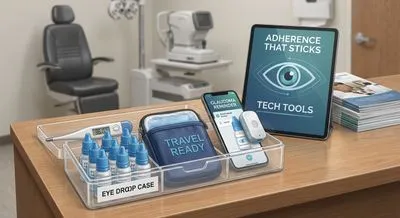
Adherence That Sticks: Storage, Travel, and Tech Tools for Glaucoma Drops
The key to taking glaucoma drops regularly is tying them to habits you already do. For example, put your eye drops next to your toothbrush or coffee...
Deep research and expert guides on maintaining your visual health.
The key to taking glaucoma drops regularly is tying them to habits you already do. For example, put your eye drops next to your toothbrush or coffee...
Blind spots often develop gradually without symptoms. Start a free trial and take a quick visual field test to spot changes early.
Find Out NowMedication reminders are tools or habits that help you remember to take medicines at the right times and in the correct way. They range from simple methods like phone alarms, notes, or pillboxes to more advanced options like smartphone apps, connected devices, or alerts shared with a caregiver. Reminders lower the chance of missed doses, which keeps treatment effective and reduces the risk of complications. They are especially helpful for people who take multiple medicines, care for others, or have busy or changing routines. Different kinds of reminders suit different people — some respond better to visual cues, others to sounds or a trusted person checking in. Certain systems can log when a dose is taken and even share that information with family or health providers. Pairing reminders with daily habits, such as taking medicine with a meal, makes them easier to follow. If one method stops working, switching to a different approach or asking a pharmacist or clinician for ideas can help you stay on track and feel less stressed about managing treatment.