
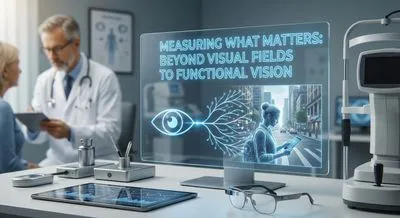
Measuring What Matters: Beyond Visual Fields to Functional Vision
Patient History and Questionnaires: Start by asking targeted questions every visit. Simple questions like “Do you have trouble reading or driving at...
Deep research and expert guides on maintaining your visual health.
Patient History and Questionnaires: Start by asking targeted questions every visit. Simple questions like “Do you have trouble reading or driving at...
Screen your peripheral vision from home — no downloads, no waiting rooms. Sign up for a free trial and test in under 5 minutes.
Home vision monitoring means regularly checking aspects of your sight at home using simple charts, phone apps, or small devices. Common checks include visual clarity, central distortion, contrast, and reading speed to watch for changes over time. The main idea is to detect subtle worsening early, so eye conditions can be treated before they cause permanent damage. People with conditions like macular degeneration, glaucoma, or diabetic eye disease often use home monitoring between clinic visits. Tools range from paper grids and smartphone tests to connected devices that send results to healthcare providers automatically. Home checks are convenient, let you test vision more often than office visits, and empower people to take an active role in their eye health. If a test shows a decline, many systems prompt you to contact your eye doctor for a full evaluation and possible treatment. Accuracy depends on following instructions, stable testing conditions, and reliable devices, so proper setup and routine are important. These programs do not replace comprehensive eye exams but are a helpful supplement for early detection and monitoring. Using home monitoring with guidance from a clinician can reduce delays in care and improve outcomes by catching problems sooner. For people at risk of vision loss, regular home checks can provide peace of mind and clearer, timely steps when changes occur.