
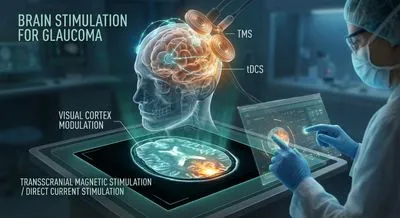
Brain Stimulation for Glaucoma: tDCS, TMS, and Visual Cortex Modulation
Vision outcomes: Measured outcomes have included visual field indices (e.g. detection accuracy or mean defect in perimetry) and sometimes contrast...
Deep research and expert guides on maintaining your visual health.
Vision outcomes: Measured outcomes have included visual field indices (e.g. detection accuracy or mean defect in perimetry) and sometimes contrast...
Our visual field test is inspired by the perimetry methods eye care professionals use. Check for blind spots and track changes over time.
Test Your VisionBrain stimulation refers to methods that change brain activity by delivering electrical currents or magnetic pulses to specific areas. Some approaches are noninvasive and sit on the head to gently alter electrical activity, while others involve implanted devices that deliver pulses directly to deep brain structures. These methods can increase or decrease the excitability of neurons, temporarily shifting how a brain region communicates with others. Scientists and clinicians use stimulation to study how different parts of the brain contribute to thinking and behavior and to try to improve symptoms in conditions like depression, movement disorders, or chronic pain. Effects can be short-lived after a single session or longer-lasting when combined with training and repeated sessions. Safety and side effects vary by method and intensity, so protocols and monitoring are important. Because stimulation can influence the brain’s ability to reorganize, it is often explored alongside rehabilitation to enhance recovery. Results differ between people, so researchers are still learning how to tailor approaches for the best outcomes. Knowing about brain stimulation matters because it offers a way to directly influence brain circuits and potentially speed or guide recovery and learning.