
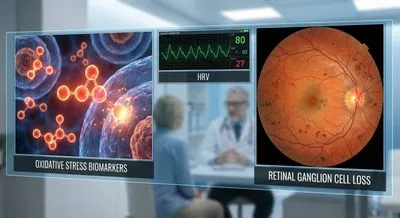
Біомаркери окислювального стресу, ВСР та втрата гангліозних клітин сітківки
У цій статті ми пояснюємо, що таке маркери окислювального стресу, такі як F2-ізопростани, малоновий діальдегід (МДА) та 8-гідрокси-2’-дезоксигуанозин...
بحث عميق وأدلة خبراء حول الحفاظ على صحتك البصرية.
У цій статті ми пояснюємо, що таке маркери окислювального стресу, такі як F2-ізопростани, малоновий діальдегід (МДА) та 8-гідрокси-2’-дезоксигуанозин...
I denne artikel forklarer vi, hvad biomarkører for oxidativ stress som F2-isoprostaner, malondialdehyd (MDA) og 8-hydroxy-2'-deoxyguanosin (8-OHdG)...
I den här artikeln förklarar vi vad markörer för oxidativ stress som F2-isoprostaner, malondialdehyd (MDA) och 8-hydroxi-2’-deoxiguanosin (8-OHdG)...
V V tomto článku vysvětlíme, co jsou markery oxidačního stresu jako F2-izoprostany, malondialdehyd (MDA) a 8-hydroxy-2’-deoxyguanosin (8-OHdG) a jak...
I denne artikkelen forklarer vi hva oksidative stressmarkører som F2-isoprostaner, malondialdehyd (MDA) og 8-hydroksy-2'-deoksyguanosin (8-OHdG) er,...
Trong bài viết này, chúng tôi giải thích F2-isoprostanes, malondialdehyde (MDA) và 8-hydroxy-2’-deoxyguanosine (8-OHdG) là gì và cách chúng được tìm...
この記事では、F2-イソプロスタン、マロンジアルデヒド(MDA)、8-ヒドロキシ-2'-デオキシグアノシン(8-OHdG)といった酸化ストレスマーカーとは何か、そしてそれらが緑内障でどのように見られるかを説明します。私たちはHRV(心拍変動)を定義し、それが緑内障でどのように変化するかをレビューしま...
Neste artigo, explicamos o que são marcadores de estresse oxidativo como F2-isoprostanos, malondialdeído (MDA) e 8-hidroxi-2'-desoxiguanosina...
En este artículo, explicamos qué son los marcadores de estrés oxidativo como los F2-isoprostanos, el malondialdehído (MDA) y la...
In this article, we explain what oxidative stress markers like F2-isoprostanes, malondialdehyde (MDA), and 8-hydroxy-2’-deoxyguanosine (8-OHdG) are,...
8-OHdG stands for 8-hydroxy-2'-deoxyguanosine, a modified form of one of the building blocks of DNA. It is created when reactive oxygen molecules called free radicals damage the guanine bases in DNA. Because cells repair damaged DNA and release 8-OHdG into body fluids, scientists can measure it in urine, blood, or tissue samples. Higher levels of 8-OHdG generally indicate more oxidative damage to the genetic material in cells. That matters because DNA damage can disrupt normal cell function, speed aging processes, and increase the risk of illnesses such as cancer and neurodegenerative diseases. Doctors and researchers use 8-OHdG as a marker to track how much oxidative stress a person or organ has experienced. It can also help assess whether lifestyle changes or antioxidant treatments are reducing oxidative damage over time. While it does not tell you the exact cause of the damage, it provides a sensitive window into the balance between damage and repair happening inside cells. Different lab methods exist to measure 8-OHdG, and results should be interpreted alongside other health information for a complete picture. In short, 8-OHdG is a useful biological indicator that helps connect molecular damage inside cells with overall health and disease risk.