
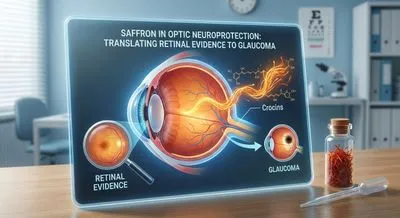
Safran (Crocine) in der optischen Neuroprotektion: Übertragung retinaler Erkenntnisse auf Glaukom
Antioxidative Neuroprotektion. In-vitro- und Tierstudien zeigen konsistent, dass Crocin und Crocetin Netzhautzellen vor oxidativem Stress schützen....
Tiefgehende Forschung und Expertenratgeber zur Erhaltung Ihrer Sehgesundheit.
Antioxidative Neuroprotektion. In-vitro- und Tierstudien zeigen konsistent, dass Crocin und Crocetin Netzhautzellen vor oxidativem Stress schützen....
Blinde Flecken entwickeln sich oft allmählich und ohne Symptome. Starten Sie eine kostenlose Testversion und machen Sie einen schnellen Gesichtsfeldtest, um Veränderungen frühzeitig zu erkennen.
Jetzt herausfindenCrocetin ist ein natürliches Carotenoid, das in Pflanzen wie Safran vorkommt und für Farbe und bestimmte Wirkungen verantwortlich ist. Chemisch ist es ein Aglykon, also die Form eines Farbstoffs ohne daran gebundene Zuckermoleküle. Im Unterschied zu einigen anderen Inhaltsstoffen ist Crocetin eher fettlöslich und hat eine orange-rote Erscheinung. In Laboruntersuchungen zeigte Crocetin antioxidative und entzündungshemmende Eigenschaften, weshalb es in der Forschung Beachtung findet. Solche Wirkungen sind relevant, weil oxidative und entzündliche Prozesse bei vielen Erkrankungen eine Rolle spielen. Im Körper kann Crocetin durch Stoffwechselvorgänge weiterverarbeitet werden und so verschiedene Effekte entfalten. Forscher prüfen unter anderem, ob Crocetin zum Schutz von Nervenzellen oder der Netzhaut beitragen kann, wobei belastbare Aussagen beim Menschen noch begrenzt sind. Crocetin wird auch als natürlicher Farbstoff und in Nahrungsergänzungen untersucht. Für Verbraucher und Wissenschaftler ist Crocetin interessant, weil es eine Brücke bildet zwischen traditionellen Pflanzenstoffen und modernen gesundheitlichen Fragestellungen.