
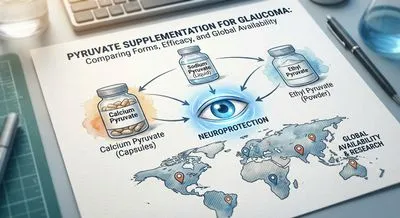
Bổ sung Pyruvate cho Bệnh Glaucoma: So sánh các dạng, hiệu quả và khả dụng toàn cầu
Pyruvate là một hợp chất ba carbon mà cơ thể chúng ta tạo ra khi đường được phân hủy để tạo năng lượng (). Hãy coi nó như một phân tử nhiên liệu quan...
Nghiên cứu sâu và hướng dẫn chuyên gia về việc duy trì sức khỏe thị giác của bạn.
Pyruvate là một hợp chất ba carbon mà cơ thể chúng ta tạo ra khi đường được phân hủy để tạo năng lượng (). Hãy coi nó như một phân tử nhiên liệu quan...
Bắt đầu bài kiểm tra thị trường miễn phí của bạn trong chưa đầy 5 phút.
Bắt đầu kiểm tra ngaySodium pyruvate là muối natri của axit pyruvic, một phân tử quan trọng trong quá trình chuyển hóa năng lượng của tế bào. Nó là một chất trung gian của glycolysis, quá trình phân giải đường để tạo ra năng lượng cho cơ thể. Ở dạng muối natri, pyruvate hòa tan tốt và thường được sử dụng trong môi trường nuôi cấy tế bào và nghiên cứu sinh học. Hợp chất này còn được biết đến vì khả năng trung hòa một số gốc tự do và có đặc tính chống oxy hóa nhẹ. Trong phòng thí nghiệm, sodium pyruvate giúp cung cấp năng lượng bổ sung cho tế bào, hỗ trợ tăng trưởng và giảm tổn thương do stress oxy hóa. Một số nghiên cứu trên động vật cho thấy nó có thể giúp bảo vệ mô khỏi tổn thương do thiếu oxy, viêm hoặc stress chuyển hóa. Tuy nhiên, bằng chứng ở người còn hạn chế và cần các thử nghiệm lâm sàng lớn hơn để xác nhận lợi ích y tế cụ thể. Trước khi dùng dưới dạng bổ sung, nên cân nhắc liều lượng, độ tinh khiết và khả năng tương tác với thuốc khác, và tham khảo ý kiến chuyên gia y tế khi cần thiết.