
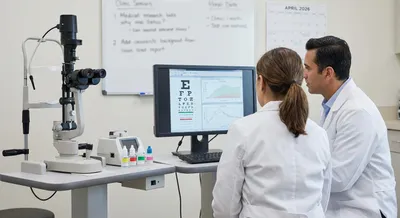
Utvaskings- og redningsprotokoller i IOP-senkende studier fra april 2026
Betablokkere (f.eks. timolol): Disse blir vanligvis vasket ut ved å stoppe dråpene i 4 uker. Forskning viste at en 2-ukers pause vanligvis er for...
Grundig forskning og ekspertguider for å opprettholde synshelsen din.
Betablokkere (f.eks. timolol): Disse blir vanligvis vasket ut ved å stoppe dråpene i 4 uker. Forskning viste at en 2-ukers pause vanligvis er for...
Spor endringer i sidesynet mellom øyelegebesøk. Start din gratis prøveperiode og få resultater på under 5 minutter.
IOP står for intraokulært trykk, det vil si trykket inne i øyet. Det måles i millimeter kvikksølv (mmHg) og er en viktig størrelse når øyehelsen skal vurderes. Normalt IOP ligger ofte mellom omtrent 10 og 21 mmHg, men dette kan variere fra person til person. Høyt IOP øker risikoen for skader på synsnerven og kan føre til glaukom, en gruppe sykdommer som gradvis ødelegger synet. IOP påvirkes av hvor mye væske øyet produserer og hvor lett den kan renne ut gjennom øyets dreneringssystem. Måling og overvåkning av IOP er derfor viktig for å oppdage problemer tidlig og hindre varig synstap. Behandling for å senke IOP kan være øyedråper, tabletter, laserbehandling eller kirurgiske inngrep, avhengig av årsak og hvor alvorlig tilstanden er. Mange personer med høyt IOP merker ingen symptomer tidlig, derfor anbefales jevnlige øyeundersøkelser, særlig hvis man har risikofaktorer som høy alder eller familiehistorie. I klinisk forskning brukes IOP som en viktig målestørrelse for å vurdere om nye behandlinger virker. Riktig målingsteknikk, tidspunkt for måling og oppfølging er nødvendig for å få et nøyaktig bilde av øyetrykket over tid.