
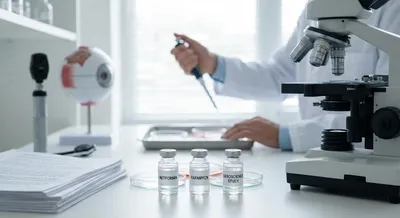
Metformin, rapamycin og gerovidenskabelige lægemidler: Øjenresultater
Metformin er et udbredt diabetesmedicin, der også aktiverer AMP-aktiveret kinase (AMPK), efterligner kaloriebegrænsning og kan reducere cellulær...
Dybtgående forskning og ekspertguider til vedligeholdelse af dit syn.
Metformin er et udbredt diabetesmedicin, der også aktiverer AMP-aktiveret kinase (AMPK), efterligner kaloriebegrænsning og kan reducere cellulær...
Spor ændringer i perifert syn mellem øjenlægebesøg. Start din gratis prøveperiode og få resultater på under 5 minutter.
Rapamycin er et lægemiddel med både immunhæmmende og antibakterielle egenskaber, som oprindeligt blev fundet i jordprøver. I medicinsk brug hjælper det med at forhindre afstødning efter organtransplantation ved at dæmpe immunsystemets aktivitet. Det virker ved at blokere et vigtigt cellestyringssystem kaldet mTOR, som regulerer cellevækst, stofskifte og reparation. Ved at hæmme denne vej ændres cellernes måde at vokse og dele sig på, hvilket har både terapeutiske og bivirkningmæssige konsekvenser. Rapamycin kan gives som tablet eller via injektion afhængigt af situationen. Bivirkninger kan omfatte øget risiko for infektioner, dårligere sårheling og ændringer i blodfedtstoffer, så brug kræver tæt opfølgning. På baggrund af hvordan det påvirker celleprocesser er stoffet også interessant i forskning om aldring og kroniske sygdomme, hvor man forsøger at forstå om det kan forlænge sund levetid. Samtidig er der en vigtig afvejning mellem potentielle fordele og de risici, der følger med nedsat immunforsvar. Derfor er brugen uden for godkendte indikationer et område, der kræver mere forskning og forsigtighed.