
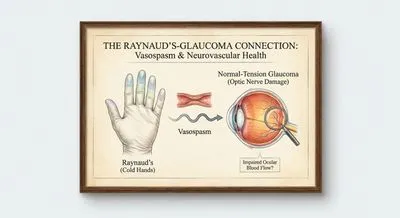
Vasospasm, Cold Hands, and Normal-Tension Glaucoma: The Raynaud’s Connection
Raynaud’s phenomenon is a condition where cold or stress causes the small arteries in the fingers and toes to spasm and shut down blood flow (turning...
Deep research and expert guides on maintaining your visual health.
Raynaud’s phenomenon is a condition where cold or stress causes the small arteries in the fingers and toes to spasm and shut down blood flow (turning...
Our visual field test is inspired by the perimetry methods eye care professionals use. Check for blind spots and track changes over time.
Test Your VisionA cold provocation test is a simple medical procedure that checks how blood vessels respond when a part of the body is exposed to a cold stimulus. During the test, a hand, foot, or finger may be placed in cold water or exposed to a cold object while a clinician watches color changes, measures temperature, or uses instruments to record blood flow. In people with overly sensitive blood vessels, the cold can cause exaggerated narrowing of the vessels, reducing blood flow and producing pale or blue skin and numbness. The test helps identify abnormal circulation responses that might explain symptoms like cold, painful, or discolored fingers and toes. Results can guide diagnosis and treatment by showing whether vessels overreact to cold and how severe that reaction is. The procedure is usually low risk, though it can provoke temporary discomfort or symptoms similar to those that led to testing. Preparation is minimal, but patients may be asked to avoid certain medications or stimulants before the test so results are accurate. Doctors may combine this test with other exams or imaging to get a fuller picture of vascular health. Knowing how blood vessels behave in the cold matters because it helps target therapies that improve circulation and prevent tissue damage in people with abnormal vascular reactions.