

April 2026 Glaucoma Trial Launches: A Global Landscape Review
The April 2026 trials can be grouped by their main intervention modality:
Deep research and expert guides on maintaining your visual health.
The April 2026 trials can be grouped by their main intervention modality:
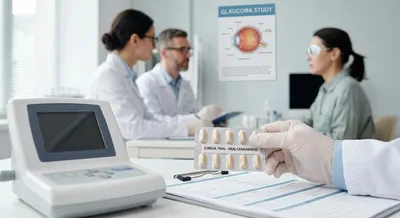
Before we dive in, let’s remember why eye pressure matters. Glaucoma is a group of eye conditions where high pressure or poor blood flow damages the...
Capturing slow changes in eye pressure and fields (monitoring). A recent study (the ADAGES group) looked at long-term glaucoma data and found that...
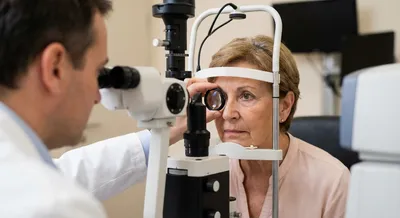
In this article we will explore unilateral and asymmetric glaucoma in depth. We begin with why one eye can be affected more than the other, then...
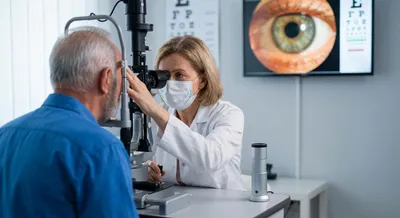
For angle-closure glaucoma, the genetics are more complex and less clear-cut. This form depends on eye shape (shallow front chamber) more than one...
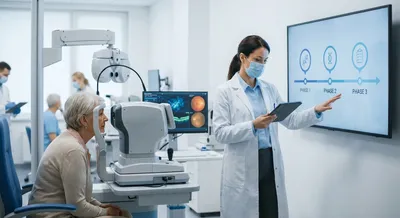
New Eye Drops and Supplements: Beyond GLP-1 drugs, other novel compounds are under study. For example, Ocular Neuroenhancement: Early trials of...
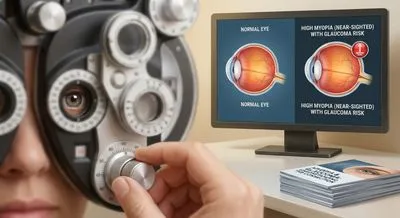
Diagnosing glaucoma in myopic eyes is tricky. Moderate-to-high myopia changes the eye’s shape and anatomy, making standard glaucoma tests harder to...
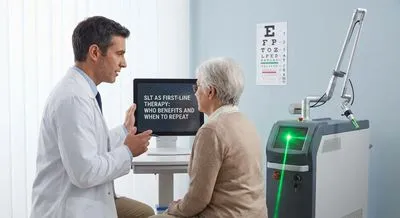
The pivotal LiGHT trial (Lancet 2019) compared first-line SLT to eye drops in newly diagnosed glaucoma/ocular hypertension patients () (). Over 3...
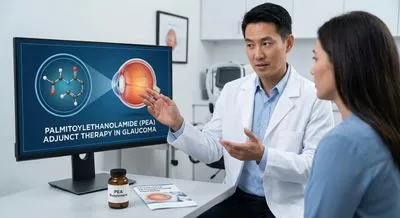
Several clinical trials have tested whether oral PEA can help lower IOP in glaucoma or ocular hypertension. In these studies, patients usually...
Screen your peripheral vision from home — no downloads, no waiting rooms. Sign up for a free trial and test in under 5 minutes.
Ocular hypertension means the pressure inside the eye is higher than normal but there are no signs of optic nerve damage or vision loss yet. It is measured with a tool called a tonometer and is expressed in millimeters of mercury (mm Hg), with typical normal pressures ranging roughly from 10 to 21 mm Hg. Having higher eye pressure increases the risk of developing glaucoma, a condition that can damage the optic nerve and lead to permanent vision loss. People with ocular hypertension usually do not have symptoms, which is why regular eye exams are important, especially if you have other risk factors like age or family history. Doctors monitor pressure over time and also check the optic nerve and visual field to decide whether treatment is needed. Treatment options can include eye drops, laser procedures, or surgery to lower pressure and reduce the chance of progression to glaucoma. Lifestyle steps such as healthy blood pressure control, regular exercise, and avoiding medications that can raise eye pressure may help, but medical follow-up is essential. Not everyone with ocular hypertension will develop glaucoma, and the decision to treat depends on how high the pressure is and a person’s overall risk. Understanding ocular hypertension helps people appreciate why routine eye checks matter — catching elevated pressure early gives the best chance to preserve vision.