
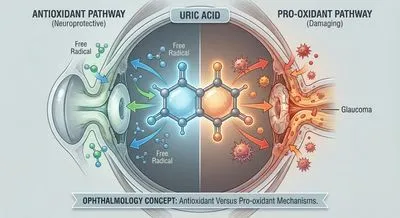
Uric Acid: Antioxidant Versus Pro-oxidant in Glaucoma
Studies of serum UA in glaucoma patients have yielded mixed results. A 2023 systematic review and meta-analysis (1,221 glaucoma patients vs. 1,342...
Deep research and expert guides on maintaining your visual health.
Studies of serum UA in glaucoma patients have yielded mixed results. A 2023 systematic review and meta-analysis (1,221 glaucoma patients vs. 1,342...

In this article, we explain what oxidative stress markers like F2-isoprostanes, malondialdehyde (MDA), and 8-hydroxy-2’-deoxyguanosine (8-OHdG) are,...
Heart rate variability (HRV) is the natural variation in time between consecutive heartbeats. Rather than beating like a metronome, a healthy heart speeds up and slows down slightly with each breath and in response to activity or stress. HRV is measured by recording the tiny differences in intervals between beats using an electrocardiogram or wearable sensors, and those differences are summarized with simple numbers that reflect short-term and longer-term patterns. These numbers can be calculated from short recordings or tracked over days and weeks to show trends. HRV matters because it gives a window into how well the body adapts to stress and recovers during rest. Higher variability generally indicates a resilient heart and nervous system, while lower variability can suggest stress, fatigue, illness, or reduced recovery. Factors such as sleep, fitness, breathing, age, medications, and hydration all influence HRV, so it’s most useful when tracked over time rather than judged from a single reading. People use HRV to guide training, manage stress, monitor recovery, and sometimes to help assess health risks or the course of illness.