
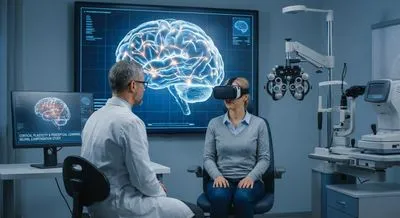
Cortical Plasticity and Perceptual Learning: Can the Brain Compensate for Optic Nerve Damage?
Interestingly, many glaucoma patients have little awareness of their blind spots. This perceptual filling-in – where the brain “fills” missing...
Deep research and expert guides on maintaining your visual health.
Interestingly, many glaucoma patients have little awareness of their blind spots. This perceptual filling-in – where the brain “fills” missing...
Screen your peripheral vision from home — no downloads, no waiting rooms. Sign up for a free trial and test in under 5 minutes.
Vision training refers to structured exercises and activities designed to improve how your eyes and brain work together. It focuses on skills like eye movement control, focusing, depth perception, hand-eye coordination, and recognizing contrast and detail. Sessions can include computer-based tasks, physical exercises, or repetitive visual tasks that challenge specific visual processes. People use vision training for many reasons, including improving performance in sports, correcting childhood visual disorders, or helping recovery after injury. The idea is that repeated practice can strengthen the brain circuits that process visual information, a concept linked to perceptual learning. Vision training matters because better visual skills can make everyday activities like reading, driving, and navigating a space safer and easier. Evidence shows it can help in some conditions, but results vary, and benefits are often specific to the exact skills trained. For medical problems or serious vision loss, training is usually one part of a broader plan that may include medical treatment or assistive devices. Good programs set clear goals, use repeatable exercises, and are guided by eye care professionals to ensure they are safe and effective.