
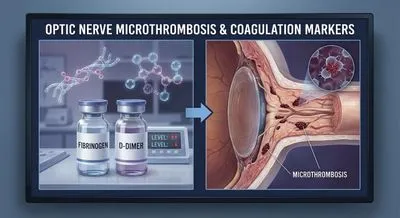
Alvadási markerek (fibrinogén és D-dimer) és a látóideg mikrothrombosisa
Ennek eredményeként a kutatók javasolták az alvadási markerek, például a fibrinogén és a D-dimer mérését annak megállapítására, hogy ezek...
Mélyreható kutatások és szakértői útmutatók a látásegészség fenntartásához.
Ennek eredményeként a kutatók javasolták az alvadási markerek, például a fibrinogén és a D-dimer mérését annak megállapítására, hogy ezek...
A glaukómához hasonló állapotokból eredő látótérvesztés észrevétlen maradhat. Indítson ingyenes próbaverziót, és percek alatt vizsgálja meg a lehetséges vakfoltokat.
A fibrinogén egy vérplazmában található fehérje, amely a véralvadás fontos részét képezi. Amikor a szervezet sérül és vérzés lép fel, egy enzim, a trombin átalakítja a fibrinogént fibrinné. A fibrin hálózatként működik, ami megszilárdítja a vérlemezkéket és elzárja a sérült érszakaszt. Ezt a folyamatot nevezik alvadásnak, és nélkülözhetetlen a vérzés megállításához. A máj termeli a fibrinogént, ezért májbetegség esetén a szintje csökkenhet. Megemelkedett fibrinogénszint fordulhat elő gyulladásnál, fertőzésnél, terhességnél vagy bizonyos krónikus betegségeknél. Magas érték jelezheti azt is, hogy nagyobb a hajlam trombózisra, míg alacsony érték vérzékenységet okozhat. A fibrinogén mérése segít az orvosoknak kideríteni az alvadási problémák okát és a kezelés szükségességét. Gyakran együtt vizsgálják más alvadási vizsgálatokkal, hogy teljesebb képet kapjanak a véralvadás állapotáról. Ennek az információnak a birtokában dönthetnek például véralvadásgátló kezelésről vagy beavatkozásról.