
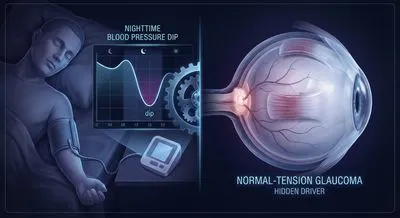
The Nighttime Blood Pressure Dip: A Hidden Driver in Normal-Tension Glaucoma
OPP is like the eye’s blood “fuel”. When systemic blood pressure (the “pump”) falls or eye pressure (“back pressure”) rises, OPP drops. Decades of...
Deep research and expert guides on maintaining your visual health.
OPP is like the eye’s blood “fuel”. When systemic blood pressure (the “pump”) falls or eye pressure (“back pressure”) rises, OPP drops. Decades of...
Visual field loss from conditions like glaucoma can go unnoticed. Start a free trial and screen for potential blind spots in minutes.
24-hour blood pressure monitoring is a way of measuring a person’s blood pressure continuously over a full day and night using a small wearable device. The machine takes readings at regular intervals while the person goes about normal activities and sleeps, building a detailed picture of how blood pressure changes over 24 hours. This method catches patterns that a single office reading can miss, such as lower pressure at night or brief spikes during activity. It helps doctors tell the difference between temporarily high readings at the clinic and real, sustained high blood pressure. Knowing how blood pressure behaves at night is especially important because nighttime levels can predict long-term risk to the heart and other organs. The data also helps guide treatment choices, such as whether medicine should be taken at night or during the day. The test is noninvasive, usually comfortable, and generally safe for most people. Results are summarized as average daytime and nighttime numbers, and as the overall 24-hour average, which clinicians use to make decisions. For people whose blood pressure varies a lot, this monitoring offers a clearer, more reliable picture than occasional checks. It matters because accurate measurement leads to better treatment and can reduce the risk of future health problems.