
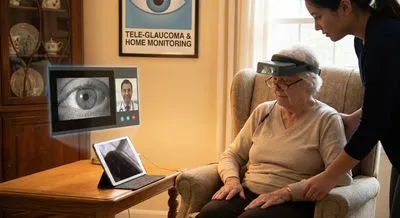
Tele-Glaucoma y Monitorización Domiciliaria en Poblaciones Envejecidas
La presión intraocular (PIO) es el factor de riesgo modificable más importante en el glaucoma. La monitorización remota de la PIO permite a los...
Investigación profunda y guías de expertos para mantener tu salud visual.
La presión intraocular (PIO) es el factor de riesgo modificable más importante en el glaucoma. La monitorización remota de la PIO permite a los...
Examina tu visión periférica desde casa — sin descargas, sin salas de espera. Regístrate para una prueba gratuita y evalúa en menos de 5 minutos.
La teleglaucoma es la atención a personas con glaucoma que se realiza a distancia mediante tecnologías digitales para evaluar, supervisar y orientar el tratamiento. Incluye el envío remoto de datos de pruebas u imágenes oftalmológicas y consultas por videollamada o mensajes seguros con especialistas. Gracias a ello, pacientes en zonas rurales o con dificultades de movilidad pueden acceder a evaluación especializada sin desplazarse largos trayectos. Este enfoque facilita el cribado, el seguimiento de la presión ocular y la detección temprana de cambios que podrían indicar empeoramiento. La teleglaucoma también permite priorizar casos urgentes y optimizar las visitas presenciales para quienes más lo necesitan. Sin embargo, depende de buena conectividad, equipos adecuados y personal formado para realizar y transmitir pruebas con calidad. Además, la privacidad de los datos y la integración de la información en la historia clínica son retos importantes a resolver. No sustituye completamente la exploración presencial cuando se requieren pruebas complejas o procedimientos, pero complementa y amplía el acceso a cuidados. Para muchos pacientes representa mayor comodidad, menor coste y continuidad en el control de su enfermedad. Conocer cómo funciona ayuda a decidir cuándo es una opción adecuada y qué expectativas tener sobre la atención a distancia.