
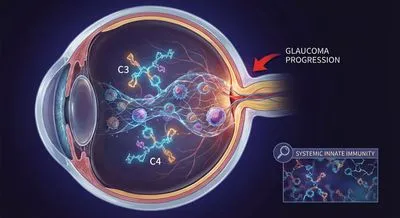
Komplementproteiner C3 og C4: systemisk medfødt immunitet og progression af grøn stær
Komplementsystemet er en del af den medfødte immunitet – kroppens hurtige, uspecifikke forsvar mod infektioner eller skader. Komplement består af en...
Dybtgående forskning og ekspertguider til vedligeholdelse af dit syn.
Komplementsystemet er en del af den medfødte immunitet – kroppens hurtige, uspecifikke forsvar mod infektioner eller skader. Komplement består af en...
Synsfeltstab fra tilstande som grøn stær kan gå ubemærket hen. Start en gratis prøveperiode og screen for potentielle blinde pletter på få minutter.
C4 er et andet vigtigt protein i komplementsystemet og spiller en særlig rolle i en af de aktiveringsveje, systemet kan bruge. Ved aktivering spaltes C4, og de dannede fragmenter indgår i dannelsen af komplekser, som viderefører aktiveringen af resten af systemet. Ligesom andre komplementkomponenter hjælper C4 med at markere fremmede partikler, så immunceller lettere kan fjerne dem. Nedbrydningsprodukterne fra C4 kan også medvirke til inflammation og tiltrække immunceller til infektions- eller skadeområder. Måling af C4-niveauer i blodet bruges ofte i klinikken til at vurdere immunaktivitet og kan give svar ved mistanke om autoimmune sygdomme. Mutationer eller overdreven forbrug af C4 kan føre til lave niveauer, hvilket kan øge modtageligheden for visse infektioner eller påvirke risikoen for autoimmune tilstande. Forståelse af C4s funktion er derfor vigtig både for diagnosticering og for udvikling af behandlinger, der påvirker komplementsystemet. På den måde er C4 både en aktiv deltager i forsvaret og et nyttigt redskab i medicinsk vurdering.