
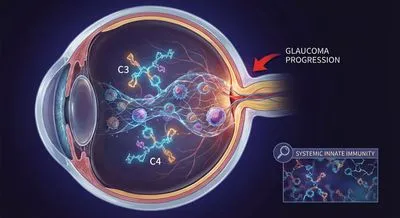
Komplementproteiner C3 og C4: systemisk medfødt immunitet og progression af grøn stær
Komplementsystemet er en del af den medfødte immunitet – kroppens hurtige, uspecifikke forsvar mod infektioner eller skader. Komplement består af en...
Dybtgående forskning og ekspertguider til vedligeholdelse af dit syn.
Komplementsystemet er en del af den medfødte immunitet – kroppens hurtige, uspecifikke forsvar mod infektioner eller skader. Komplement består af en...
C3 er et af de mest centrale proteiner i komplementsystemet og er afgørende for, at systemet kan udføre sine funktioner effektivt. Når C3 aktiveres, spaltes det i to dele, ofte kaldet C3a og C3b, som hver især har forskellige roller. C3b binder sig til overflader på bakterier og andre fremmede partikler og gør dem lettere for immunceller at genkende og fjerne. C3a fungerer som et signalstof, der fremmer inflammation og tiltrækker immunceller til det ramte område. På grund af sin nøglestilling virker ændringer i C3 hurtigt igennem hele komplementsystemet og kan give enten nedsat forsvar mod infektioner eller øget vævsskade ved overdreven inflammation. Klinisk måles C3 ofte for at vurdere immunaktivitet ved forskellige sygdomme, og lave eller høje niveauer kan give vigtige ledetråde. Der findes også arvelige og erhvervede tilstande, der påvirker C3, og forskning i dette protein har ført til udvikling af lægemidler, der kan hæmme eller ændre dets aktivitet. Derfor er C3 både et nøgleelement i kroppens forsvar og et vigtigt mål for diagnostik og behandling.